It’s a strange feature of the modern world that one can travel nearly anywhere and encounter the same bleak landscapes: featureless office parks, hollowed-out downtowns, concrete bunkers posing as civic buildings, or gas stations glowing under fluorescent haze.
Even our schools and churches – institutions once built with aspiration – often resemble warehouses or insurance agencies. When visiting older cities or classical neighborhoods, people often speak of them almost longingly. These places feel human, ordered, harmonious. They all seem to say something true about reality itself, that the world is not merely something to be used, but something meant to be contemplated.
We instinctively know when we are in the presence of beauty. We also know when we are not. The tragedy of our moment is not merely that the modern world has grown ugly, but that we have convinced ourselves this ugliness is inevitable, even enlightened. Yet beauty is not a luxury. It is a civilizational necessity. The neglect of beauty in architecture, art, and public life is both a symptom and a cause of our spiritual malaise.
To talk seriously about beauty is to talk seriously about the kind of people we hope to form. That is why beauty is not only a private preference but a public good.
Why Beauty Matters
Roger Scruton devoted his life to recovering the public importance of beauty. In Why Beauty Matters, he argued that beauty is not mere ornamentation but a “call to home.” Beauty draws the soul upward. It tells us that the world possesses order, meaning, and intelligibility. It bridges the gap between what is and what ought to be.
Beauty teaches us to linger. To contemplate. To experience wonder. These are not trivial emotional states; they’re conditions of moral formation. A person who can experience reverence for beauty is a person capable of gratitude, restraint, and love — the virtues which self-governance requires.
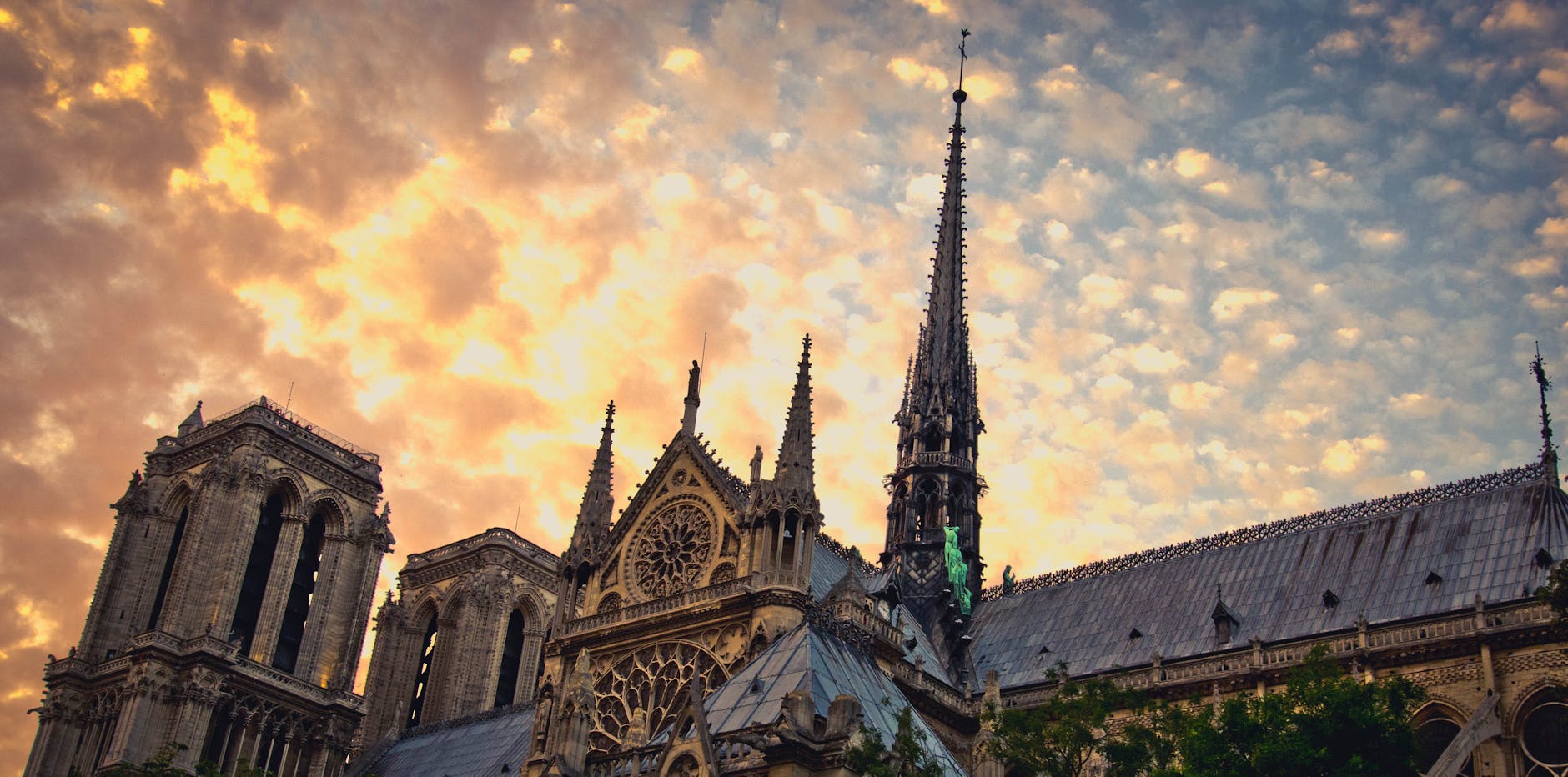
Modern culture, in its leveling impulse, insists that beauty is “subjective.” Scruton responded simply: That is an evasion. We know beauty is not subjective because beautiful things endure. People return to them. They attract affection across centuries and cultures. A rose window in the cathedral at Chartres speaks to the human soul not because of cultural conditioning but because of its harmony, an objective harmony that corresponds to something in us.
Beauty addresses us, and in addressing us, it ennobles.
The Cost of Ugliness
If beauty elevates, ugliness diminishes. Ugliness is not neutral; it communicates a vision of the world. Walk down a street lined with brutalist slabs, abandoned warehouses, or strip malls surrounded by an ocean of asphalt. You feel a subtle pressure toward cynicism. These places evoke feelings of disaffection. Nothing matters. Life is mostly functional, not meaningful.
This matters civically. People behave differently in beautiful environments. They are more polite, more neighborly, more protective. Beauty invites stewardship. Ugliness invites vandalism. The “broken windows” theory was not merely about crime; it was about the moral environment. A society that tolerates ugliness communicates an indifference that inevitably spreads to the habits of its citizens.
Ugliness also shrinks the imagination. Children raised among soulless architecture experience a kind of aesthetic deprivation. Human beings need beauty in the same way they need nature, community, and ritual. Without it, life becomes flat. People retreat indoors, absorbed by screens, because nothing in their built environment calls them out of themselves.
Thus, ugliness does not just degrade the landscape. It degrades the citizen.
The Conservative Case for Aesthetic Standards
Beauty serves to counter the two distinctively modern temptations: nihilism and utopianism.
Nihilism claims that life has no inherent meaning. Beauty contradicts that effortlessly. When we encounter a work of art or architecture that affects us, we are reminded, even if we cannot articulate it, that the world carries a certain fittingness. Beauty is a quiet rebuttal to despair, rooting us in gratitude.
Utopianism, by contrast, purports to remake the world by force, ignoring human limits. It is not accidental that totalitarian regimes produce brutal architecture: giant concrete blocks, oppressive monuments, cities designed for surveillance rather than community. Ugliness becomes a political statement: the individual is nothing; the regime is everything.
Beauty, however, acknowledges limits. It works with nature rather than against it. It respects the human person. It does not seek to dominate but to elevate.
In this way, beauty forms a political philosophy of stewardship, humility, and continuity rather than domination or amnesia.
Beauty as Civic Responsibility
A civilization that abandons beauty abandons hope. Beauty is not decoration; it is formation. It shapes a people’s imagination,and through that imagination, shapes their character. To conserve beauty is to conserve the conditions for human flourishing: reverence, imagination, gratitude.
Political life, too, depends on these virtues. Citizens capable of wonder are citizens capable of self-government. They preserve rather than plunder. They build rather than merely consume.
We need not return to the past uncritically. But we do need to recover the habits and standards that once enabled us to build places worthy of the human person. Beauty is not pure nostalgia. Beauty is responsibility, a duty we owe both to our ancestors and to our descendants.
Scruton put it this way: “When we build beautifully, we are paying tribute to those who came before us, and offering hope to those who will come after.”
Beauty is a public good. To neglect it is to neglect ourselves. To restore it is to restore something of our humanity.