For the grace of God that brings salvation has appeared to all men, teaching us that, denying ungodliness and worldly lusts, we should live soberly, righteously, and godly in the present age. (Titus 2:11)
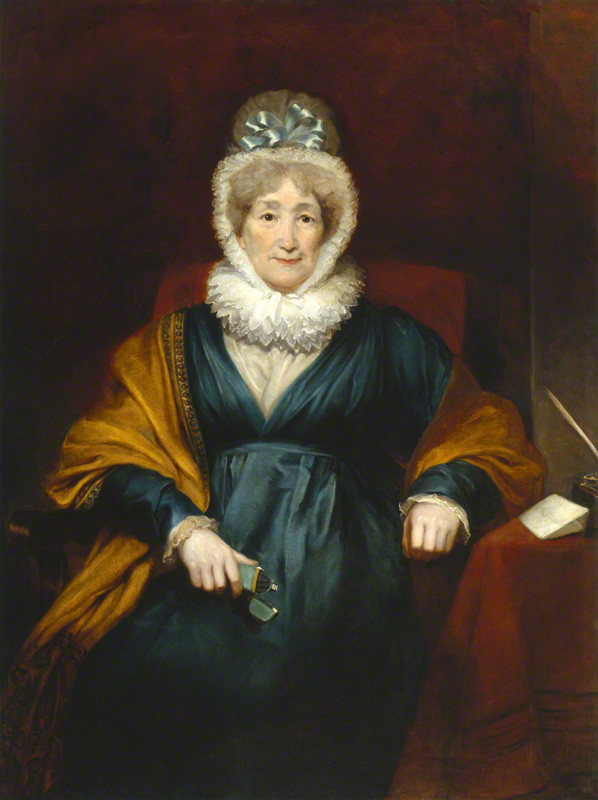
Born in 1745, Hannah More was a zealous abolitionist, British conservative, and Christian philanthropist. She was a dear friend of William Wilberforce, the statesman who led the abolition of the slave trade in Great Britain. Ironically, More died the same year as Wilberforce, on August 7th, 1833, less than two months after the Abolition of Slavery Act passed Parliament. While she is commonly remembered for her political activism, More was also a proficient poet and playwright, writing numerous books for women on education, manners, and Christian living. An incredibly influential figure of her time, More’s writings contain much practical wisdom for the conservative Christian women of today.
More begins her 1799 book Strictures On the Modern System of Female Education by highlighting one of the primary gifts women possess: influence. Women are by nature influential beings. Thus, how a woman chooses to wield her influence will significantly impact those around her. More states that how women “shall hereafter make of this influence, will depend, in no low degree, the well-being of those states, and the virtue and happiness, nay perhaps the very existence of that society” (emphasis added). Because women possess profound influence, More even dedicates an entire book to women’s education and manners. For if women have a momentous effect on a nation, then the character of the nation’s women is of supreme importance to the welfare of the nation. Likewise, if women are as influential as More believes they are, then we women should take care to wield our influence with dignity and sagacity.
It’s compelling to note that More does not begin her book discussing the method of education women should undergo, nor present a recommended reading list. Rather, More first addresses how instrumental literature and entertainment are in shaping the minds of a society. Because women inevitably influence those around them, men will often follow the examples provided by their wives, sisters, and mothers. For this reason, women must especially take heed as to what material they entertain themselves with. More explained this in detail:
“In animadverting farther on the reigning evils which the times more particularly demand that women of rank and influence should repress, Christianity calls upon them to bear their decided testimony against every thing which is notoriously contributing to the public corruption. It calls upon them to banish from their dressing room, (and oh, that their influence could banish from the libraries of their sons and husbands!) that sober and unsuspected mass of mischief . . .”
More urges women to be vigilant to keep their lives pure from all forms of evil. If a woman wants the public libraries to be filled with good literature, she must first start with her personal bookshelf. This “mass of mischief” can appear in many forms, two of which are novels and plays. More criticizes how both literature and drama often provide women with sensual ideas like portraying an adulterous woman as the heroine of the tale. Marriage is presented as “an unjust infringement on liberty,” not a life-long covenant between a loving husband and honoring wife. “Religion and morals will stand or fall together,” More argues. The arts are often the silent weapons waging war on both the Christian faith and the moral character of a nation.
While the culture and context in which More wrote is quite different from our own, More’s words nevertheless have great application for America today. A day does not pass that our Instagram and Facebook feeds are not flooded with some form of sexual or sensual entertainment. Pornographic romance novels fill the bookshelves of every Barnes & Noble store. Taylor Swift, a single, pro-choice feminist who sings “f— the patriarchy,” is one of the most celebrated musicians of our day. The regency-era Netflix show Bridgerton, filled with every form of lewdness and profanity, is one of the most popular shows amongst young women.
Sadly, many professing Christian and conservative women take part in these, binging erotic shows on Netflix and listening to music that mocks our Savior. Many fail to remember that conservatism, and more importantly Christianity, is a way of life. America did not just one day have pornographic novels in children’s schools or have a 50% divorce rate; the United States slowly lost her virtue and order through small compromises on the part of its people. As the 18th century minister John Wesley noted, “What one generation tolerates, the next will embrace.”
Conservatism is more than merely championing freedoms like free speech and low taxes or voting red on election day. We must take care in everything – from the things we wear, to the movies we watch, to the conversations we have – to conserve righteousness and preserve the godly principles of our patriarchs.
Perhaps the fact that America now puts pornographic children’s books in schools is downstream from initial acceptance of lewd romance novels. Perhaps one reason America has such high divorce rates is because we did not first guard our hearts and minds from sensual entertainment. Perhaps one reason America champions abortion is because we first believed the lie that our liberty is dependent on our independence.
Of course, we should not place all the blame on the ladies; men have no-doubt done their fair share. Nevertheless, as conservative and Christian young women, we must watch and reflect as to where we may in-fact be contributing to the lawlessness and lasciviousness of our nation. As Christians, we are called to emulate our Lord Jesus Christ in righteousness and purity (see Ephesians 5). We must conserve the good, the true, and the beautiful, while rejecting the evil, the false, and the ugly. Conservatism is not an abstract political philosophy for Capitol Hill; conservatism is here, right now, in your state, city, home, and very own life.
Ladies, do not underestimate your influence or believe the lie that your personal choices have no effect on those around you. The things with which you entertain your mind and heart, have a far greater impact on your friends, brothers, fathers, and husbands than you may ever know.
To conserve righteousness in our nation, we must not neglect to conserve it within our own lives. Let us take Hannah More’s exhortation to heart, carrying out our Christian duty to rid ourselves of “every thing which is notoriously contributing to the public corruption.” We have influence, and what we do with this influence will contribute to the character and “perhaps the very existence” of our nation.