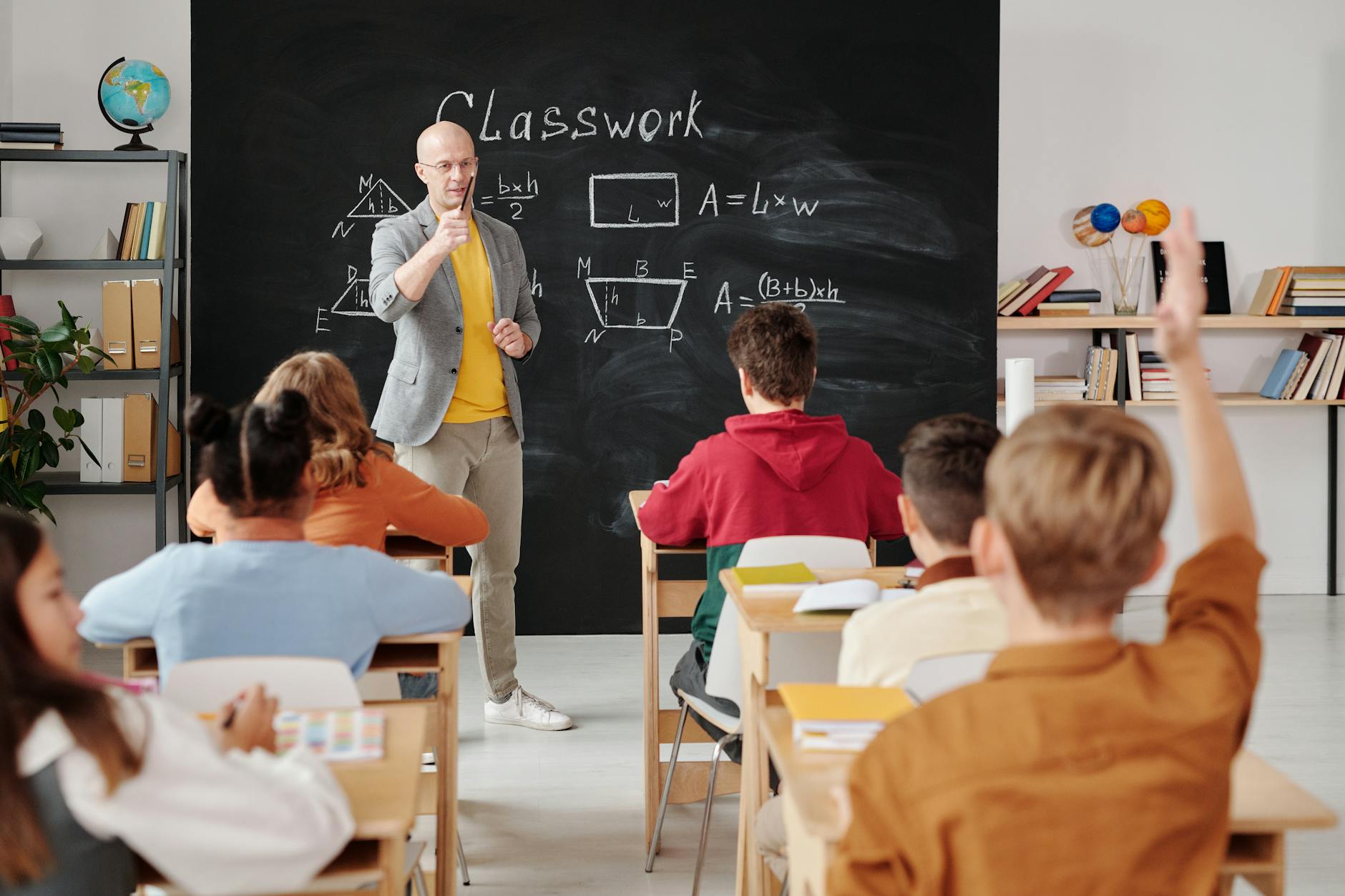
Our education system today looks markedly different from the mid-20th century schooling our grandparents received, and the performance of our students reflects that.
The classics were virtually scrubbed from the average American child’s schooling experience during the era of compulsory education laws which reshaped public schools. In the 1950s, mathematics and science were prioritized to strengthen the United States’ global standing through the National Defense Education Act. By the 1980s, Latin and Greek had all but vanished from public school curricula, despite being a necessary element of a formal education since first introduced to Roman children. Now, few students pursue the humanities in their truest form, immersing and exposing themselves to the foundational languages and texts that once formed the bedrock of Western education.
The results are clear: Our current system is deeply misguided, and America’s children deserve far more.
The classical school movement is one motivated by restoring America’s intellectual tradition of cultivating virtue and instilling the skills necessary for children to become lifelong learners. Instead of offering a sense of completion after years in a classroom, classical schools challenge their students to pursue knowledge for life.
From the perspective of honoring the great works that came before us, conservatives must acknowledge that the best contributions in political theory, philosophy, literature, and music lie in the past. These works should be returned to the forefront of students’ education, rather than being displaced by modernity and fleeting educational trends. Classical education is not a fad, it’s the timeless form of learning practiced even up through our grandparents’ generation.
As Aristotle beautifully articulates, “educating the mind without educating the heart is no education at all.”
Attempting to separate intellectual training from moral development is impossible; the two are inseparable. Classical education includes the virtues of courage, wisdom, humility, integrity, responsibility, and gratitude.
From the mid-20th century onward, education shifted toward vocational training and standardized metrics. Practical skills were elevated while liberal arts and virtues declined, leaving children prepared for jobs but not for life in society. Between 1955 and 1980, the number of students enrolled in vocational education doubled, driven by federal incentives like the Vocational Education Act. Meanwhile, universities faced shifting institutional priorities, and classics departments disappeared altogether or were left endangered. This time represents not just a federal shift towards standardized schooling, but a change in educational philosophy. The focus shifted to preparing children for the workforce rather than for society. It should come as no surprise that when we prioritize careers and the workforce above all else, the other aspects of life are neglected, leaving children with misplaced priorities and absent of a firm moral foundation.
We’re not raising robots or parrots; we’re shaping children to develop good habits, live well, and contribute to the well-being of our nation and society. Classical education provides the moral foundation upon which all other skills can be taught. The K-12 years are to be spent understanding oneself and the world around us, specialized training comes afterwards. Connecting subjects to the deeper intellectual pursuits of understanding order, pursuing the good, and the principles which came before us provide depth to embrace the pursuit of truth.
Rote memorization of facts is insufficient without the ability to analyze and apply information. Students must be trained in the disciplines of contemplation.
Aristotle’s categorization of knowledge into three types highlights what modern students miss in traditional education. This includes scientific knowledge, practical knowledge, and practical wisdom. Knowledge is essential, but wisdom is the highest intellectual virtue and precisely the education our schools must embrace. Practical wisdom goes beyond mere rule-following; it is the ability to discern the right action in every situation. It fosters sound decision-making and reflects a disciplined effort to weigh consequences and seek balance. Through consistency and proper instruction, education is vital for our civilization to cultivate virtue.
Our society will find true flourishing in this pursuit of wisdom and knowledge, rather than chasing intense specialization and early career training. Beyond the lack of adaptability, over-specialization fosters isolation, limiting the capacity for interdisciplinary thought. We risk becoming fragmented, neglecting the holistic well-being of what it means to be human — rational, spiritual, and physical.
The philosophy behind education shapes its curriculum, methods, and assessments. The elements of curriculum, instruction methods, and assessment tools will reflect this philosophy. Our general cultural disposition towards school will also reflect this.
It’s worthwhile to reflect on why our country shifted, and particularly to reflect on whether this switch was to support a particular need at the time, or if it was to stay as our permanent perspective. Have our nation’s children been better served by this switch? Has society seen better fruit from the result of these changes?
The task of restoring education is long overdue. If we are to continue a government-run and government-influenced education system, there are millions of students affected by the educational philosophy our nation and its leaders hold. What is needed is not just curricular reform, but a return to the classical philosophy that underlies true learning — one that develops both the minds and the hearts of students.