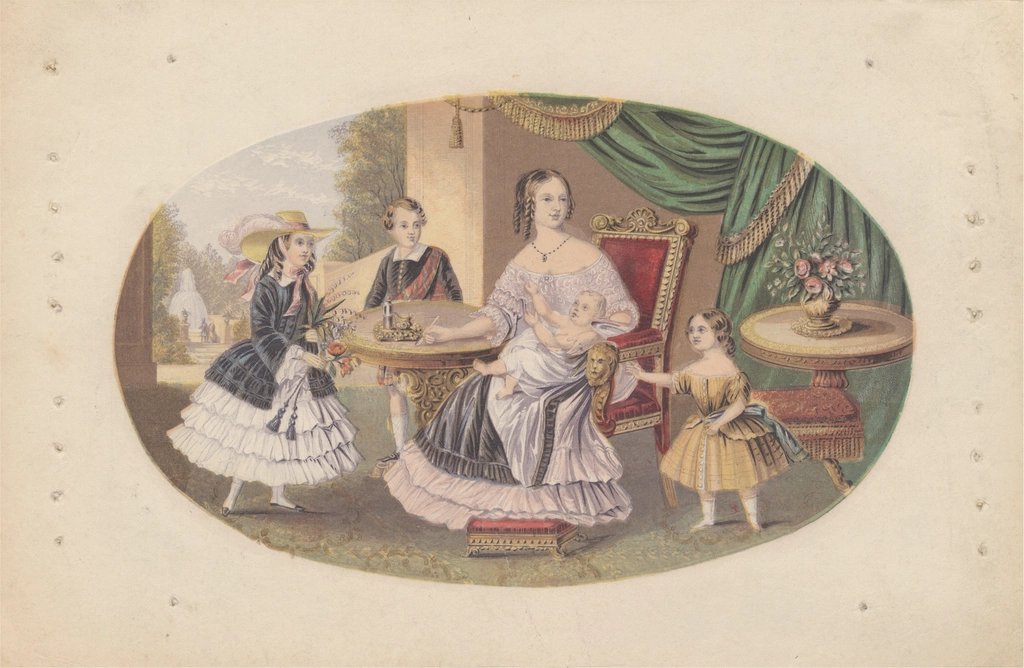
In the Middle Ages, the castle was at the heart of the city. In the center of the castle was the court, and within the court dwelt the princess and her courtiers. During her tenure, it was understood that the princess had a political role to play in maintaining the peace of the city. Indeed, her virtuous femininity and wise council extended beyond the center court to the entire kingdom at large. The 14th-century Italian author Christine De Pizan wrote her work The Treasure of the City of Ladies as a manual for how a medieval princess could both pursue virtue in her own life, and in doing so, maintain peace in her city. Through her dignified example and council, the virtuous princess of the Middle Ages exercised prudential politics.
To the Medievals, morality precedes politics. Accordingly, the state of the city reflects the virtue or vice of its citizens. This implicit assumption laid the foundation for The Treasure of the City of Ladies. Moral virtue is necessary for the good government of laws. Likewise, because of the position of a princess, she must take care to live a life of honor and dignity. De Pizan noted that “nothing influences the common people so much as what they see their lord and lady do.” The prudent princess does not legislate or rule on public matters to the extent of her husband, but her moral influence lays the foundation for justice. The princess’ moral influence embodies her political influence.
Because virtue is necessary for justice, the princess must first rule herself. She is not capable of influencing others toward virtue if she herself is not ruling her appetites and selfish desires. This principle of self-governance is highlighted throughout the entirety of De Pizan’s book. The princess must have a “strength and steadfastness of heart” and “know how to master and correct one’s heart.” She rules her city through first ruling her own soul. Unlike the jewels in her castle, her “virtues are nobler, because they endure forever and are the treasures of the soul.” The princess exercises prudential politics through exercising restraint upon her desire for pleasure and wealth.
However, the wise princess does not govern her own self through her own wisdom, but rather through the grace and power of God. Her virtues flow out of a heart that is submitted to the Lord; accordingly, the first virtues that indwell her soul are “the love of and the fear of Our Lord.” She loves the Lord because of His goodness and fears Him because of His justice. Thus, she does not consider wealth her due nor demand a place of honor, for she recognizes herself as a steward of God. The fear of God’s judgment and the love of His righteousness rule her heart.
Similarly, because the princess recognizes her position as a place given to her by God, she lives a life of humility and meekness. She is a vice regent of the Lord; “the rank that she receives is only an office for which she will soon have to account to God.” Thus, she does not account her position as one of right, but rather one of stewardship. The virtuous princess “will render thanks to God and attribute all the honour to Him,” De Pizan explains. The prudent princess carries herself with humility not because she lacks honor, but because she knows the One who granted it to her.
This spirit of humility and meekness within the soul of the princess provides the foundation by which she can direct and influence those around her. The medieval princess is a princess of the people; she freely gives and serves the people of her kingdom. No person is too menial for her, nor is any act of service below her station. Likewise, the princess’ love of God provides the means by which the princess can then love others rightly. The “noble virtue of charity which … will envelope the heart of the good princess,” De Pizan says, “will render her of such a very good will towards all people that she will imagine that everyone else is more worthy than she.” The princess’ love for others flows out of her love and humility toward the Lord.
As the princess rules her own soul through the grace of God and the cultivation of virtue, she inevitably wields political power. Her primary political role is peacemaking. Sarah Lawson, a translator of De Pizan’s works, explains that “one of Christine’s overriding concerns — a concern that is evidence in much of her advice — is for peace.” As the Middle Ages was a period of battles and constant political instability, the princess’ feminine graces and calming influence made peace possible.
One primary way in which the princess created peace was through counseling her husband. The medieval princess did not often make laws, but her influence had an indirect influence on them. She served as a mediator of sorts, presenting the citizens’ needs before the magistrate: her husband. “And so this lady will be, by pure, mild and holy charity, an advocate and mediator between the prince, her husband … and her people,” De Pizan argued. Likewise, she always speaks well of her husband in the presence of the people, granting him a favorable reputation in the eyes of his citizens. Through her respect for her husband and her love toward her people, the prudent princess serves as a bridge between the people and the prince.
Similarly, the princess maintains peace within her city by advising her husband to avoid war. De Pizan understood that since women are by nature “of a sweeter disposition” than men, their wisdom and gentleness can help pacify men’s brashness. The prudent princess foresees the calamity of her city driven into a hasty battle and advises accordingly. “How many great blessings in the world have often been caused by queens and princesses,” De Pizan remarks, “making peace between enemies, between princes and barons and between the rebellious people and their lords!” Through her influence of her prince, the princess has a non-legislative, though nevertheless political, role in her kingdom.
For De Pizan, it is in fact the feminine grace of the medieval princess which grants her the influence she wields. Her softness is in fact her strength. “[Christine De Pizan] demonstrates how a supposed weakness is in fact often a moral strength,” Lawson reasons. She has no need to be brash or coarse, for her graceful actions often speak for themselves. De Pizan believes that “the mere look of the wise lady and her subdued reception is enough of a sign to correct those men and women who err and inspire them with fear.” Similarly, the princess councils her husband with care and consideration. A princess does not rule like her prince, for she has no need to. Lawson explains:
“The queen or princess can become the power behind the throne by exerting her calming influence. Women generally work behind the scenes, tactfully, even stealthily, on a personal level.”
If the princess were to be loud or abrasive, she would discount the political power she possesses.
De Pizan’s framework for the necessary virtues and moral role of the prudent princess is not far from the virtuous woman as described in Proverbs 31. The wife described in Proverbs 31 similarly honors her husband, cares for the poor, and speaks with kindness. Like the princess of the medieval world, her husband holds a place of authority in the city. Since the chapter records the wisdom of a mother to her son King Lemuel, it would not be implausible to assume that the chapter not only defines the ideal woman, but in fact more accurately defines the ideal princess. The prudent princess as described by De Pizan is perhaps a mirror of the wise princess in Proverbs 31.
Christine De Pizan wrote The Treasure of the City of Ladies to revitalize and refine the political power of a princess in medieval Europe. The princess does not live for herself, but for the welfare of her city. Her virtue and wisdom flow out beyond the court of her castle and into the city at large. Therefore, because of the immense influence a princess has upon her kingdom, she must take care to wield her peace-making power and feminine grace prudently. She maintains peace through counseling her husband and mediating between adversaries. De Pizan remarked that “there is no greater good on earth than the good and wise princess and high-born lady. Happy is the land which has such a one and has had many such.” The city without such will surely not survive.