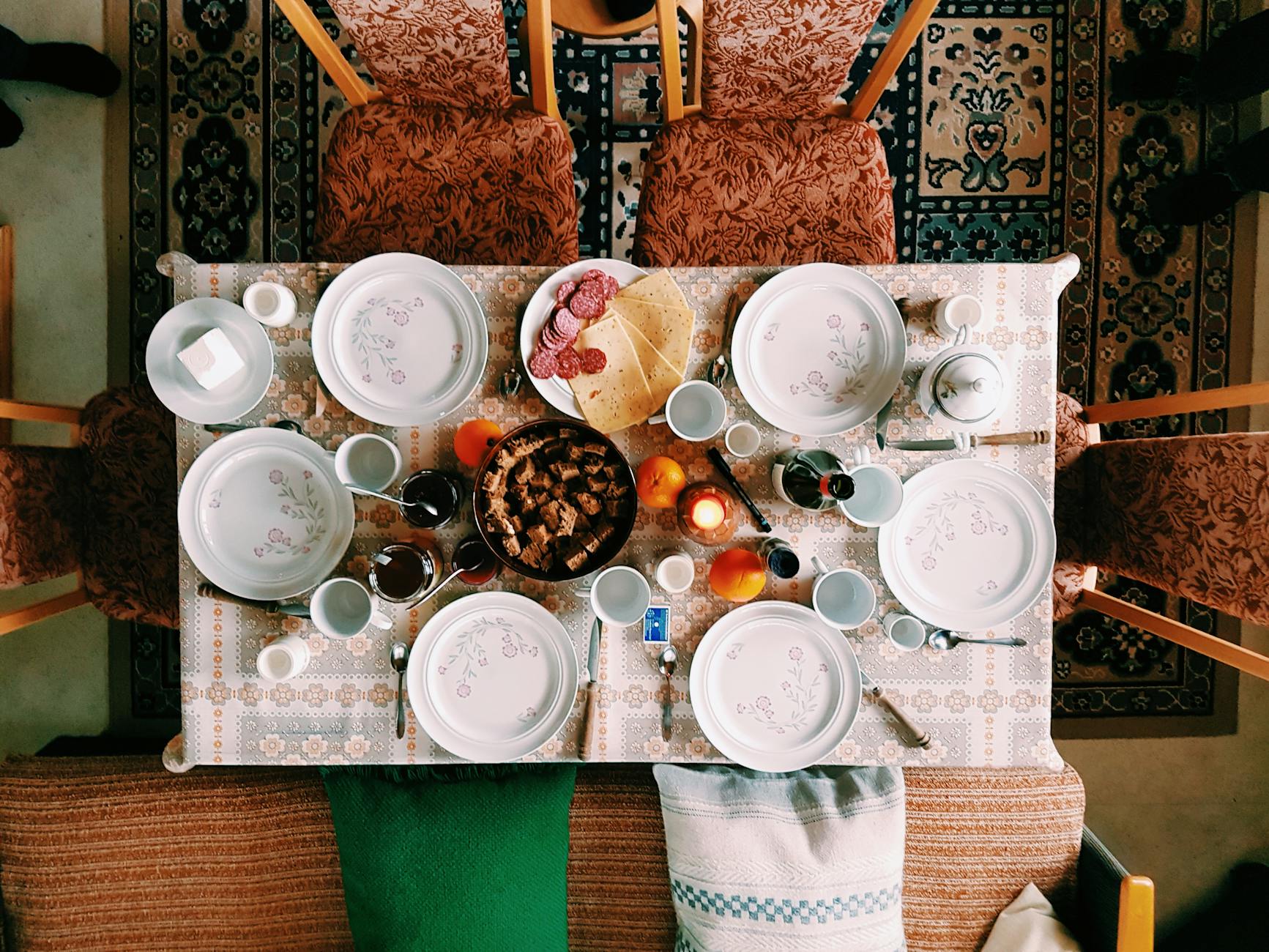
The dinner party is modernity’s Arthurian court. Amidst a delectable feast, the sounds of clinking glasses and thoughtfully chosen music whirl about. Bottles of wine and bouquets of flowers are presented to gracious hosts, who in turn spend the preceding days ironing tablecloths and napkins, picking up fresh ingredients, and arranging then rearranging the seating chart. The preparations culminate in a pile of coats and a bevvy of shoes left haphazardly by the door. Spirits, hors d’oeuvres, and a flurry of stilted small talk until the moment arrives when everyone is seated, their glasses and plates are full, and finally the guests sit face to face with one another.
This is where the problem lies. There is a responsibility that comes with having a face. It allows you to be seen and therefore, to be known. It forces people out of the nebulous realm of indifference and into decisiveness. The problem with dinner parties is that eventually, someone will turn to you and say, “What do you think?”
The problem with dinner parties is that someone will tell a controversial joke and you must decide whether you will conceal your laughter or not. The problem with dinner parties is that the small talk only gets you to the table.
The dinner party requires a calculated type of vulnerability. The number of people invited may vary, but ultimately these functions remain small as everyone must be able to sit down around the table. This allows for a closeness not otherwise found at parties. Similarly, everyone is together with no small groups or adjacent rooms to drift away to. The one respite is the restroom, but even that only accounts for a short window of time away from the group. Inevitably, everyone will be seated together and the talk will come.
Many people have been told by their mothers not to talk about inappropriate things at the kitchen table. Many people have been told by their spouses not to bring up touchy subjects. After all, the only pot that needs stirring is on the stove. Keep away from sensitive issues.
Yet, nearly everything these days could be considered a sensitive issue. Basic things such as race, gender, and dating preferences have been openly marred by both the left and the right. Everything falls downstream of our intense cultural divides. Having pets, having children, not having children, where you go to church, do you go to church, did you go to college, did you see the Super Bowl, did you want another roll or don’t you want to fill up on bread?
For many people, the best option is to stay silent. This often comes up on social media, where if by chance a relative posts something that might be disagreeable, the first reaction is to stay silent. There is no use in getting into a heated debate with Poor Aunt Sally, but what if-?
Further, if a friend or coworker posts something that feels a bit controversial, the instinct is to not engage with the post because the repercussions could be harmful to the relationship.
The only time people really post their truest, most controversial, and genuine thoughts and feelings on social media is under the guise of anonymity. People who know that their opinions will not be tied to their physical person are emboldened. It’s the strength of obscurity – it allows for radical fredom because the context of humanity has been removed. This is also why anonymous social media posts may become outright horrendous. The lack of humanity puts up an air of coldness.
When we return to the dinner table, we look around and there are tangible faces with large, reactive eyes. If something vicious is said about the cooking, the hostess might cry. If something witty is rattled off, an entire barrage of people might squint through tears of laughter. Regardless, the people around you are breathing in the same air as you, passing the salt, and letting themselves be known to the rest of the guests whether they like it or not.
There are significantly fewer dinner parties nowadays. This phenomenon (or lack thereof) could be chalked up to laziness or perhaps an inability to cook. Some might say that peoples’ homes and apartments are built so small that there isn’t any room to hold large gatherings. But these explanations do not quite understand that people are funny, passionate, thoughtful creations. If people truly wish to converse with one another, they will find a way.
There’s the heart of our matter: People don’t actually wish to converse with one another. Having a conversation brings a level of risk. The dinner party elevates that risk by providing an entire table full of people who can bear witness to the things you say and do. There is a fear that deep, provoking conversations might mean that people get things wrong, speak too fast, or lose an argument. When we have conversations, we allow ourselves to be known. There’s analysis, there are trains of thoughts that are cut off or revved up, there’s susceptibility. As much as any chicken parmesan or raspberry lemon tart, the infallible human heart is served.
The isolating media landscape has thrown people into extremely distant camps. Very few topics are safe from causing some kind of commotion. For example, the mention of the name Taylor Swift garners a lot more ire in 2025 than it did in 2015. The likelihood that some kind of alienating subject will be brought up throughout the party is almost inevitable. Someone’s fear about having a “wrong” opinion keeps them silent. As a result, they stay home, declining the invitation and instead opting to get into an argument with someone on X instead of getting into that very same argument over dinner.
Social media is a wonderful little cave to hide inside of because it separates who we are from what we think. Dinner parties are a marvelous exposé of the chef’s cooking skills and the guests’ conversation skills.
It forces us to be seen, sitting with our opinions, beholden to our beliefs. It makes us responsible for who we are.
That is a task which should eagerly be taken. There is a bold joy in someone facing across from you taking a second helping of brussel sprouts and asking, “These have always been my favorite- what do you think?”