I recently watched the Melania documentary, which seems to have slipped quickly from public attention. A brief look at its reception reveals the ever-predictable gulf between flailing critics (those who nominate films for an extraordinary number of awards simply because of their focus on racial minorities) and ordinary moviegoers (most of whom want an entertaining time at the theater).
Melania has an abysmal 11% critic rating and an astounding 98% audience score, likely because viewers predisposed against the president and his circle did not bother to see the movie.
Melania, when seen as a documentary, is rather vanilla. Indeed, it is so inoffensive that those who expect mere “regime propaganda” might find it a bit weak, which makes the bitter reaction all the more head-scratching. (If it were the same film but with “Dr.” Jill Biden as the subject, I would gamble on at least a 50% critical rating.)
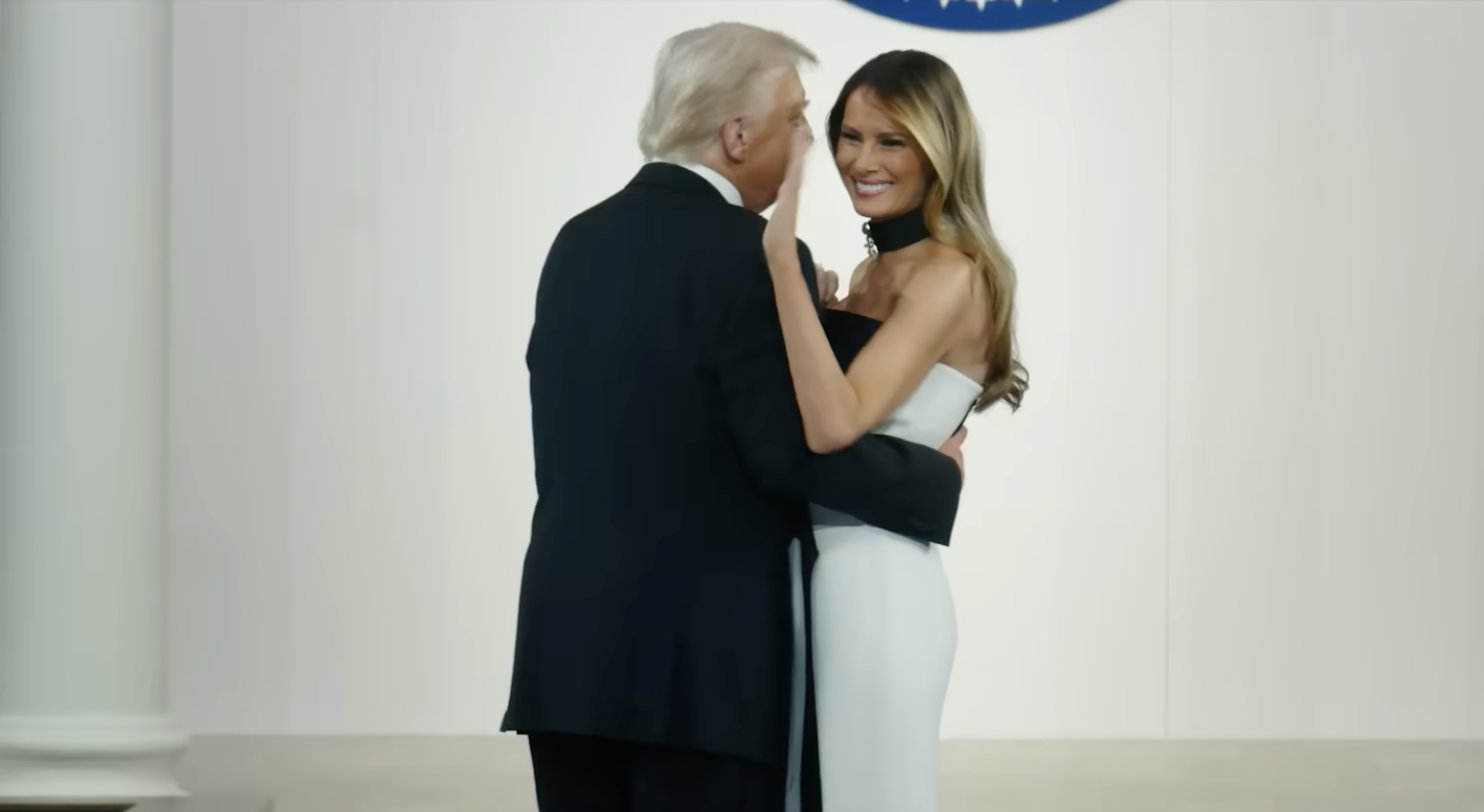
It does little more than show scenes from the days leading up to the president’s second inauguration in January 2025, as the First Lady prepares her wardrobe, lays out design plans for the White House rooms, and attends the sundry festivities surrounding the occasion. It doesn’t make explicit overtures for the MAGA agenda, nor do we get the sensation that it’s all manufactured as pure flash. Melania Trump’s public persona is reserved, stoic, and serene, and those adjectives also describe her eponymous film.
Melania is an unabashed celebration of the normalcy for which the Trump movement stands. It shows images meant to please, beguile, and interest the average American, who’s been fatigued and repulsed by the grotesque nature of the modern Left.
Quite simply, Melania is less a “glimpse into the life” of the First Lady and more about making viewers feel like things are as they should be in America. The camera pans to Melania’s opulent rooms in the penthouse of Trump Tower, art and architecture fill the halls, and the First Lady’s exquisite beauty is displayed, bedecked with a glamorous formal dress. This strikes a chord in the average viewer; it’s the return to normal standards of aristocratic beauty and nobility.
Society is tired of the Left pushing drag queens, “transgender visibility,” and “body positivity” as the new norms of human beauty. Even some of the nation’s most beautiful cities — San Francisco, Portland, Seattle, and Denver — have fallen prey to crime and squalor, only to meet the utter indifference of liberal governance.
Dr. Carl Trueman, in The Rise and Triumph of the Modern Self, speaks of transgression as the main hallmark of modern art. If it boldly repudiates old assumptions about aesthetics and smashes the moral boundaries set by the bigoted generations of days past, then it is considered good modern art. The same goes for the human form and the aesthetics of the everyday. Anything that exemplifies beauty favored by the old white European bourgeoisie (i.e., the kind that hangs on frames in the Old Masters galleries of the art museum) is fair game for destruction.
Melania rejects those myths by displaying the enduring power of the beauty that the American loves to see and is generally lacking. In a world where most people work in sterile cubicles or in gritty mechanical labor, living in cookie-cutter suburban homes or perfunctory apartments, it is right and healthy to want to see reigning images of splendor and magnificence. The state, says Aristotle in the Politics, is always an educator. It teaches not only by what it orders and encourages its citizens to do, but by the ideals of worthiness and happiness that it demonstrates in its official messaging.
For the last four years, the state educated its citizens in the superiority of the sexual degeneracy of the LGBT alphabet, the killing of the unborn child in the womb, the inherent inferiority of “white oppressors,” and the unquestioning acceptance of foreign cultures. Now, the Trump administration is turning back to what is truly admirable to behold: Melania’s presentation as a devoted wife and mother who brings beauty to her daily life. Overplayed yet endearingly populist music such as “Amazing Grace” and Bach’s “Air on the G String” fill the soundtrack. This is a welcome alternative to the manufactured musical noise that fills the grocery store and the hedonism on display in spectacles like this year’s Super Bowl Halftime Show.
Still, those of us who are devoted to the high arts and skeptical of the merits of popular culture may find cause to complain. At the end of the day, President Trump sees McDonald’s, “YMCA,” and MMA wrestling as the kind of American normalcy that represents his vision of a “reclaimed” nation. Nor is Melania, whose favorite song is Michael Jackson’s rather banal “Billie Jean,” exempt from the middlebrow (or from un-conservative opinions).
But traditionalist conservatives who believe in objective morality and beauty, as seen in great music, literature, and visual art, should still appreciate the ideal types and images offered by Melania while acknowledging that much work must be done to elevate the West from the grip of superficiality. Some images in Melania may be superficial, but they are infinitely better than what the Left has attempted to make “the new norms” this past decade.
Let us have our beauty back, even if we have to settle for some bland, inoffensive “mid” things as well. The fact that large sections of the public have flatly rejected its anemic poetry, decadently pointless music, and culture of death (embracing the suicide of the West through abortion, euthanasia, third-world immigration, and the mutilation of the youth in transgenderism) is reflected in the comically large ratings gulf of Melania.
Though a mediocre documentary at best, it’s a flagship expression of the drive to make America normal again that animated the majority of Americans in the most recent nationwide election.