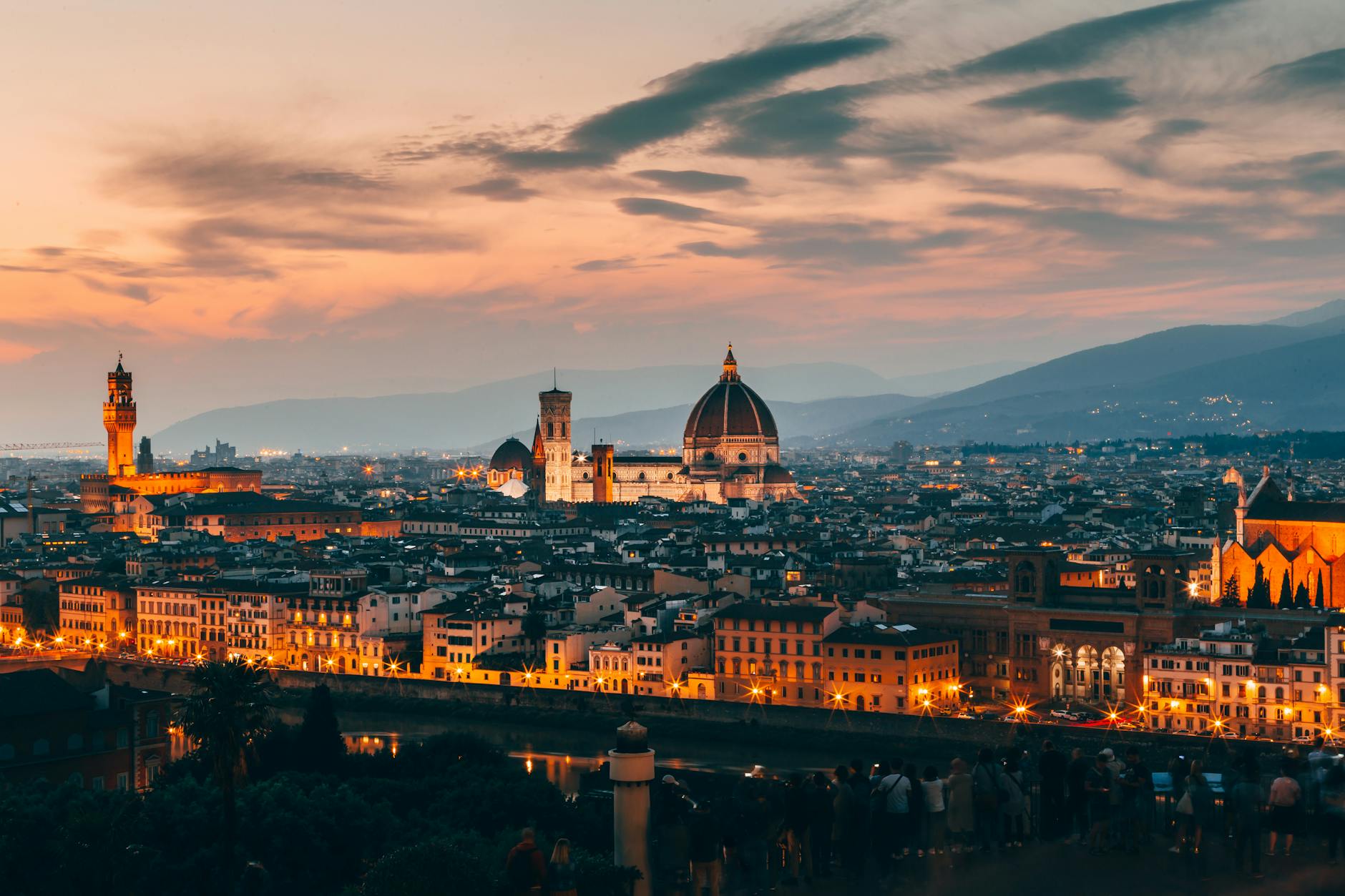
As an American in Italy, the first thing I noticed about the city of Florence was, of course, the beauty. The elaborate churches, winding medieval streets, and cobblestone roads felt more like a movie scene than a real place. As the birthplace of the Renaissance, Florence overflows with history and art.
The second thing I noticed about Florence were the inconveniences. The narrow streets turn in seemingly arbitrary directions, the uneven cobblestone makes walking in heels even more of a nightmare than it already is, and the lack of air conditioning suffocates my American sensibilities. It turns out that a city that is largely preserved for centuries is not the most accommodating to modern innovation.
This reality check forced me to take off any rose-colored glasses of a magical land full of gelato and pretty caffés that solve all my issues. Unfortunately, we cannot have it all in this world — the victory without the battle, the progress without the failure. Even beauty has a price tag. We need to recognize these annoyances and still choose to sacrifice for the sake of beauty, for stained glass windows and medieval statues.
For example, the historic cobblestone roads of Florence do not follow the familiar grid pattern of American cities. Instead, they fan out around the central church. As a result, the roads are unpredictable and harder to navigate, especially as a foreigner. While this system is clearly less “efficient,” it communicates something deeper.
As I go about my day, almost any survey of my surroundings tells me where I am in relation to the Duomo (the central cathedral). The massive building serves as the reference point for my day, guiding me to the next location and patiently waiting for me to visit. Even for non-Catholics, it’s impossible to navigate Florence without noticing the basilica.
The fact that this culture forgos a simpler design in order to orient the citizenry toward church – and therefore toward God – reminds every person that his immediate concerns often are not the most important. Sure, it is a pain to walk all the way around the giant building instead of cutting right through, but making that slightly longer walk grants the opportunity to look at the ornate facade — and maybe that artwork is more important than getting through the town faster. The streets reflect a spiritual reality, even if it leaves the traveler’s feet slightly more tired.
Later, I even noticed that the lack of air conditioning often means that people migrate outside in the evenings for the fresher air. Neighbors end up together and chat, forming genuine communities. I had the chance to talk with the chef as she took her smoke break, a conversation that would likely not have happened in our separate lives. In giving up one commodity, many Italians have developed flourishing friendships that transcend temporary comforts.
We know a culture by what it will sacrifice for. Do we sacrifice for the true, the good, and the beautiful? Or the cheap, the fast, and the consumable? When we invest in beautiful art and accept the consequences, we speak to the longings of the human heart.