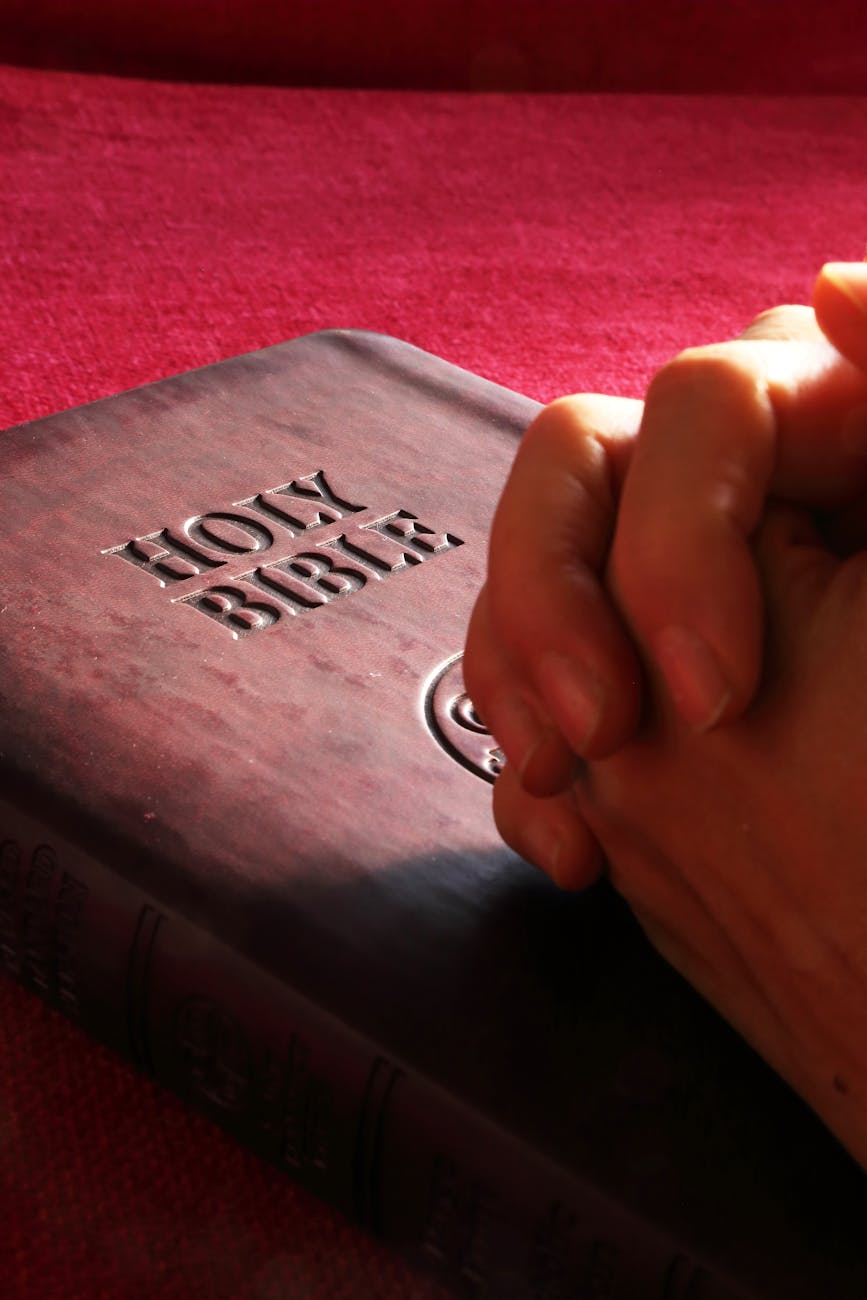
“Those families are suffering immense pain right now…Don’t just say this is about thoughts and prayers right now. These kids were literally praying.”
Mayor Jacob Frey of Minneapolis, Minnesota, delivered these remarks during a press conference following the August 28 Annunciation Catholic School mass shooting. The shooter, a man who identified as a transgender woman, murdered two children and injured 17 more before turning his gun on himself.
Jen Psaki, former White House press secretary under President Joe Biden, added her take on X later that day: “Prayer is not freaking enough. Prayers [sic] does not end school shootings. Prayers do not make parents feel safe sending their kids to school. Prayer does not bring these kids back. Enough with the thoughts and prayers.”
California Governor Gavin Newsom also chimed in on the situation, reposting a video of White House Press Secretary Karoline Leavitt addressing Psaki’s post with his own comment. “These children were literally praying as they got shot at,” Newsom wrote.
There are many issues at play in this unashamed attack on prayer. One obvious reason is the erasure of the cultural hegemony once held by Christianity in the West. As America moves further into neo-paganism, public figures like Frey and Psaki who move in socially progressive circles no longer feel any pressure to please or cater to Christians. Their open mockery of a central Christian practice reveals a sobering reality: Christianity is no longer supported or even respected by many of the most powerful figures in American politics and media.
But there’s another problem lying beneath the surface, one that may prove even more fatal to American Christianity if not addressed. The West’s abandonment of Christian morals and principles by itself need not mean the demise of Christianity in America — Christianity did, after all, survive and even thrive throughout centuries of persecution from pagan cultures.
Sloppy, imprecise theology, on the other hand, could spell disaster, eating away at the church’s theological innards until nothing remains but a thin shell of vaguely theistic moral pietism (see the Evangelical Lutheran Church of America as an example).
The truth is that the theology of prayer held by most modern evangelicals has become incredibly watered down. So many of those who call themselves Christians fail to understand the true purpose and impact of prayer. It should be no surprise, therefore, that the non-Christian culture at large has received a distorted picture of what prayer actually is. Frey and Psaki’s statements show that an improper view of prayer has certainly permeated the cultural understanding.
Those who share this scorn for Christian reliance on prayer do so because they have been taught, directly or indirectly, that prayer is a means to an end, not an end in itself. They believe that Christians pray in order to wrest from God’s hand some sort of blessing: health, wealth, success, safety. When, in instances like the shooting at Annunciation, it seems that the blessings requested by the supplicants are denied, this skepticism is reinforced.
God is not a divine vending machine. Prayer is not the means of forcing Him to dispense favors upon us. Rather, prayer aligns our hearts with God’s will and prepares us to receive His grace.
Prayer emboldens the Christian to follow God’s will in his life. It encourages him to persevere to the end of his race. It reminds him that his own efforts do not bring about God’s plan for his life or the world at large. Instead, it is God’s power working in and through millions like himself that brings God’s plan for history and humanity to fruition. John Chrysostom, a third century Church Father, wrote that prayer “is the place of refuge for every worry, a foundation for cheerfulness, a source of constant happiness, a protection against sadness.”
Should we bring our petitions for protection, peace, joy, and comfort to God? Can we, in good conscience, ask him for specific favors and blessings?
Certainly — Christ himself commands us to ask, seek, and knock, reminding us that our Father in heaven will never give us a stone when we ask for bread. But those who treat prayer as nothing more than a wish list are missing the point.
Prayer is about transformation, not transaction.
In C.S. Lewis’s The Screwtape Letters, senior tempter Screwtape reminds his nephew, Wormwood, that cultural trends and popular philosophies can be one of a tempter’s greatest weapons if properly applied. To do this, Screwtape writes, they must:
“direct the fashionable outcry of each generation against those vices of which it is least in danger and fix its approval on the virtue nearest to that vice which we are trying to make endemic. The game is to have them running about with fire extinguishers whenever there is a flood, and all crowding to that side of the boat which is already nearly gunwale under.”
Put another way: What if prayer has come under attack not because American Christians are powerful prayer warriors, but because we have forgotten the true purpose and value of prayer? Are we being pushed away from the one thing that we really need?
Now, more than ever, Christians must be fervent in prayer: prayer for our nation, our cities, our governing officials, our churches, our schools. We cannot abdicate our most valuable weapon at a time when it is so sorely needed.
Prayer has not come under attack because it does not work, but because the devil knows that it does.