In the modern age, few sins are treated more severely than having lived in the past.
Saturated with recrimination and revisionist moods, many voices tell us that our ancestors — whether parents, grandparents, great-grandparents, or even further back — were bound to be complicit in “evil,” if only by the standards of our less forgiving present.
In every inherited state, namely in the family tree, assumed tradition is tainted. This is not only an uncharitable view of the past. It’s fundamentally wrong. Our ancestors were not evil. They were like us: creatures made in the image of God, fallen, forgiven, striving. And by remembering them rightly, we recover part of our own identity and vocation.
When we speak of ancestors, we do not mean simply those to whom we are biologically related. Many who cherish Western ideals and Christian faith have no genetic ties to Europe’s builders or America’s founders. “Ancestors,” here, refers to those spiritual and civilizational forebearers who shaped the moral and cultural inheritance we still draw from; men and women who, across nations and centuries, believed life was ordered under God and worth ordering accordingly.
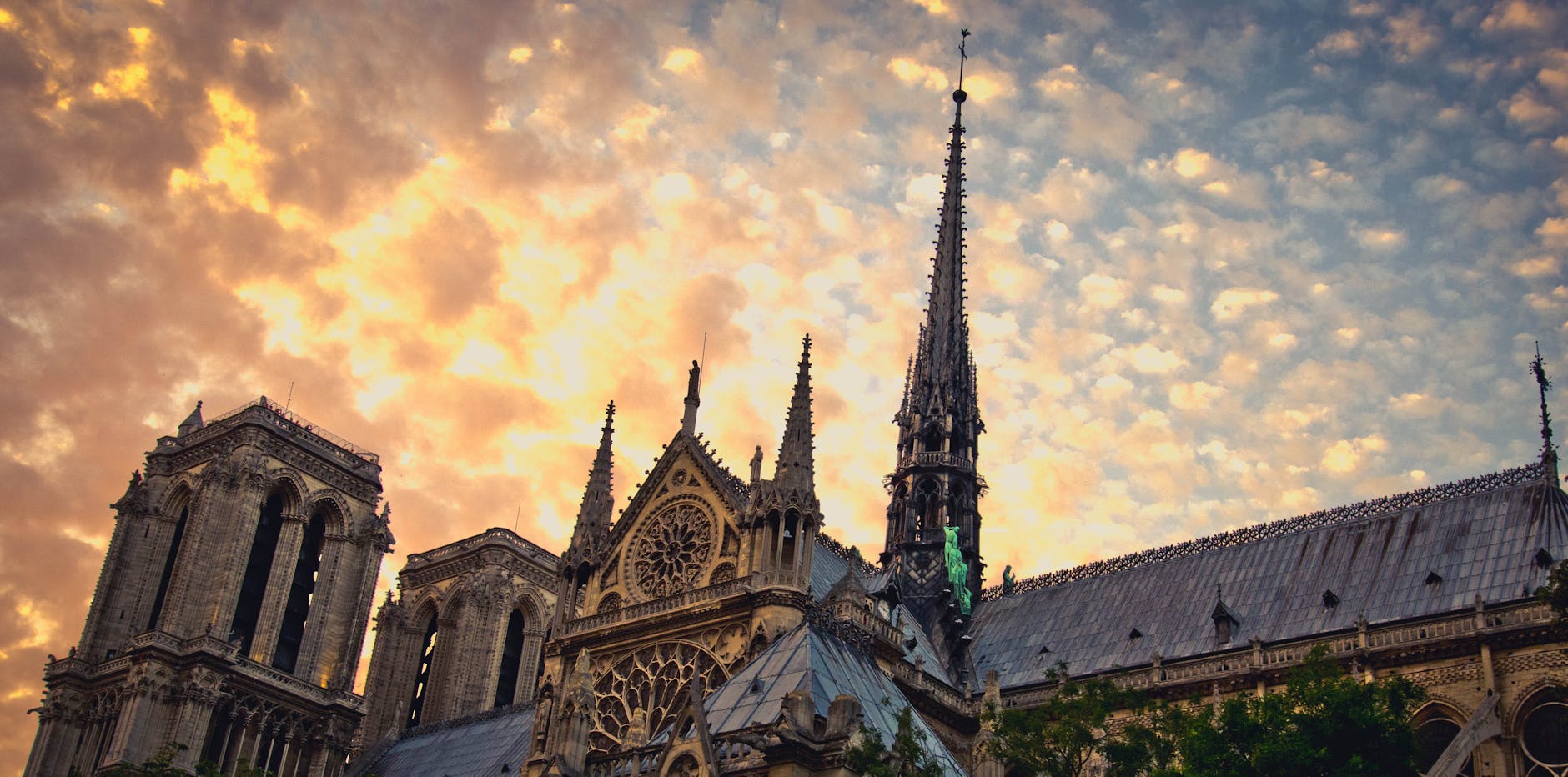
Our predecessors believed in something higher than themselves. They built cathedrals whose spires reached toward heaven. They enshrined marriage, family, faith, and duty as sacred bonds rather than social constructs. They saw children as blessings, work as vocation, and worship as something more than preference.
Were they perfect? No. The same Western civilization that gave us cathedrals and universities also produced slavery, exploitation, and wars of greed.
The difference is that they took God seriously. They refused to let evil be the final word. We, by contrast, let it fester while confessing only the imperfections of others.
C. S. Lewis warns that modern man “stands at the crossroads between two ways of seeing the world — the old, which admitted the supernatural, and the new, which admits nothing above man.”
Our ancestors lived in the former. They knew they were accountable to God. They ordered their civilization around that truth.
When we dismiss them as “unenlightened,” we reveal our own blindness to divine light.
G. K. Chesterton called tradition “the democracy of the dead.” He wrote in Orthodoxy, “Tradition refuses to submit to the small and arrogant oligarchy of those who merely happen to be walking about.”
In other words, every generation must answer to its predecessors, not just to its peers. Our ancestors are citizens of the same moral community, one extending through time.
This principle is known as conservatism: the belief that what has been handed down is not ours to despise but to steward. Edmund Burke captured it best when he articulated that society is “a partnership not only between those who are living, but between those who are living, those who are dead, and those who are to be born.”
When a culture much like ancient Rome forgets this covenant, it begins to devour itself. It rewrites its own history, shames its heroes, and calls it liberation. But liberty without gratitude always becomes anarchy — moral, spiritual, and civilizational.
The modern condemnation of the past is, at its core, a sin against the Fourth Commandment: Honor your father and your mother.
That commandment extends beyond biological parents. It includes our forefathers, the people whose prayers, sacrifices, and traditions made our lives possible.
To honor them does not mean to imitate every action or approve every error. It means to remember with gratitude. Scripture tells us, “Do not move the ancient landmark that your fathers have set” (Proverbs 22:28). Yet modern culture is obsessed with tearing up those landmarks and congratulating itself for the ruins.
Ingratitude is the beginning of apostasy. Romans 1 describes a people who “did not honor Him as God or give thanks,” and therefore “their thinking became futile and their foolish hearts were darkened.” The same dynamic unfolds today: Once we lose gratitude toward the God of history, we lose gratitude toward history itself.
The modern worship of progress is the real idolatry. It preaches that the newest idea must be the truest, that moral good increases in proportion to technological power. Yet progress without repentance is just pride in motion.
Lewis warned that without a fixed moral law — what he called the Tao — modern man becomes “men without chests,” capable of reasoning but incapable of reverence.
Our ancestors believed in the chest, the moral muscles of the soul. We, having discarded those virtues, congratulate ourselves for “evolving.” As Chesterton quipped, “The modern world is full of the old Christian virtues gone mad.”
Our ancestors endured wars, famines, and pandemics. They worked the land by hand and built homes from timber and stone. And still, they passed on the faith.
They buried children too soon and still sang hymns of praise.
To call such people “evil” is obscene. It is the judgment of a generation that has never been drafted to fight in a World War, has never gone through the Great Depression, never feared the silence after an air raid siren.
The heroes of the past were adults who believed that life demanded sacrifice. That virtue was costly and civilization fragile. We enjoy the fruits of their labor and yet scorn the tree that bore them.
When you walk into a cathedral, you are entering the faith of a thousand years of ancestors who believed beauty was worth building for God. When you vote, you are exercising the rights secured by patriots who prayed before they fought. Reading the Bible in your own language means reading the inheritance of translators who bled to print it. That is grace working through history.
To hate them is to hate yourself. To love them is to remember that you are part of a story bigger than your own reflection.
For the day will come when we are the ancestors, and our descendants will judge us. Let them find that we remembered rightly, repented humbly, and preserved faithfully what was good.