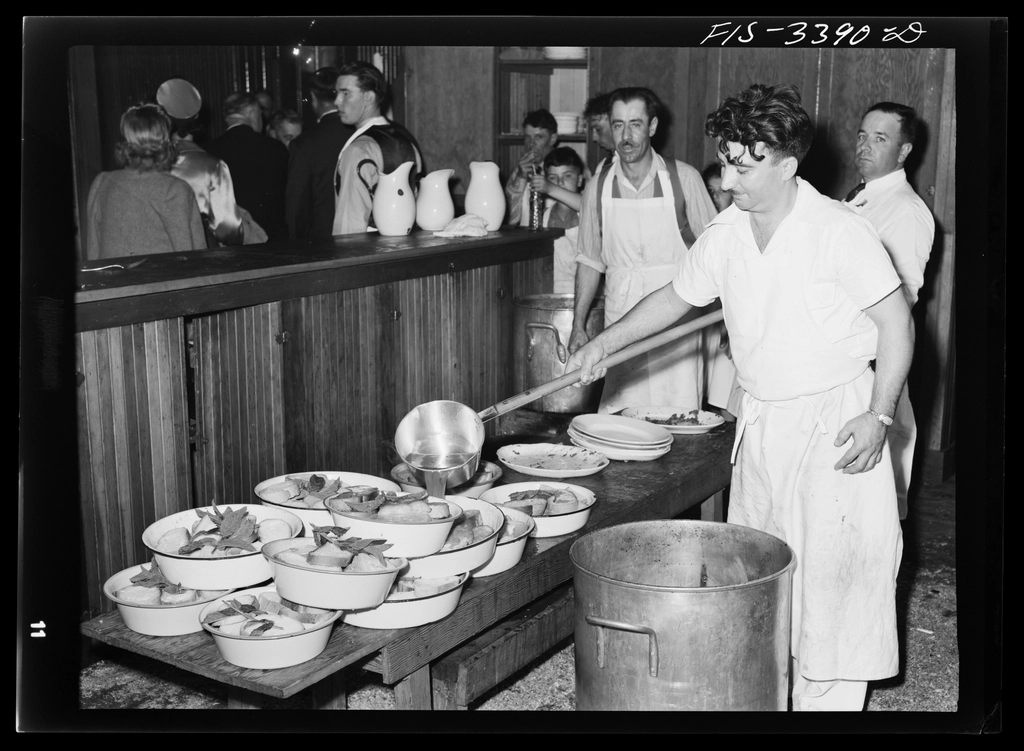
The food stamp program began during the Great Depression as a way to help both families who were struggling with malnutrition and farmers overwhelmed by their own agricultural surplus.
This is an important distinction, because it shows that the purpose of the program was twofold. It was not merely a handout system to those who couldn’t be bothered to find a job. Although the federal government was arguably overstepping its boundaries, it was trying to find a solution for two affected parties.
The government would buy up farmers’ extra inventory and distribute it to the American families who were unable to find jobs or feed their families. The program was known as the Agricultural Adjustment Act of 1933. It launched due to a present, looming threat, whereby millions of people faced starvation and illness. They scrimped and saved, yet were unable to provide for themselves despite their best efforts.
Using food stamps was a source of shame. People saw it was a sign of insufficiency and an admission of their desperation. Although the Depression was caused by forces outside of their control, they were raised to believe that they should be independent. People were embarrassed to use food stamps.
Many believed that the aid should be repaid. They didn’t want a government handout, but merely required a “hand-up” in their time of need. The original food stamp program tried to alleviate some of the personal shame associated with federal handouts by requiring the stamps to be purchased with the recipients own money. This was an intentional feature of the program. It helped reinforce the notion that this was the last hope for people, not a source of entitlement. Even then, only 4 million people were ever actively enrolled in the program during its original inception (only 3% of the 122 million American citizens).
In 2025, roughly 12% or 42 million people are on EBT. About 21% of Supplemental Nutrition Assistance Program (SNAP) recipients will use the program for longer than two years.
The mark of a failing society can often be measured through how the citizenry interacts with its government. During the Great Depression, people didn’t want the government to lift them up. They knew that hard work and self reliance would usher in a lasting prosperity. The food stamps they purchased were a lifeline during one of the country’s most difficult periods.
Whether or not the federal government overstepped its boundaries is important to discuss a century later. At the time, it was designed to reinvigorate a failing agricultural system while supplementing a physically ill country.
Today, our country is ill – not in spite of the government – but because of it.
When the Great Depression ended during the industrial boom of World War II, so did the food stamp program. Lyndon B. Johnson revived it with the Food Stamp Act of 1964. Johnson enacted it as a way to wipe out poverty and make sure that no children went hungry. His “noble cause” quickly diverged into dangerous federal overreach.
The Great Depression was a period of severe hardship for the entire country, and conditions were dire enough to declare a state of federal emergency.
On the other hand, the mid-1960s, when Johnson enacted the act, was a period of economic prosperity. The program was initially intended to distribute excess food products back to the people who were starving.
However, this leveling of the playing field wasn’t integrated into Johnson’s vision. Instead, he allowed all products (Apart from alcohol and some imported foods) to be purchased, not only government surplus products. Over time, even those few restrictions on imported foods would be lifted.
The program became permanent. Food stamps stopped being a last hope and started becoming a safety net. They would become overused and abused. They would lose their embarrassing reputation. The generation of food stamp recipients who valued their independence were gone. They were replaced by generations of SNAP recipients who were anxious and occasionally boastful about their ticket to a free meal.
Our culture celebrates the grift. Elbow grease is a thing of the past. Modernity calls upon underhanded, systematic misuse. It praises laziness and cries for equitable outcomes. There are people in the country genuinely suffering because their economic circumstances make it difficult for them to afford food. However, the program reflects a country that doesn’t want the burden of work but wishes to reap its benefits. Inflation is high and times are tough, but this is not 1933.
And you best believe that those living in the shanties of Hoovervilles weren’t buying cases of Coca Cola … and Coca Cola didn’t have 25% of their annual sales subsidized by food assistance programs.
What was designed to save the sick is being used to bludgeon the poor. America is too great to keep its people on a form of perpetual life support.