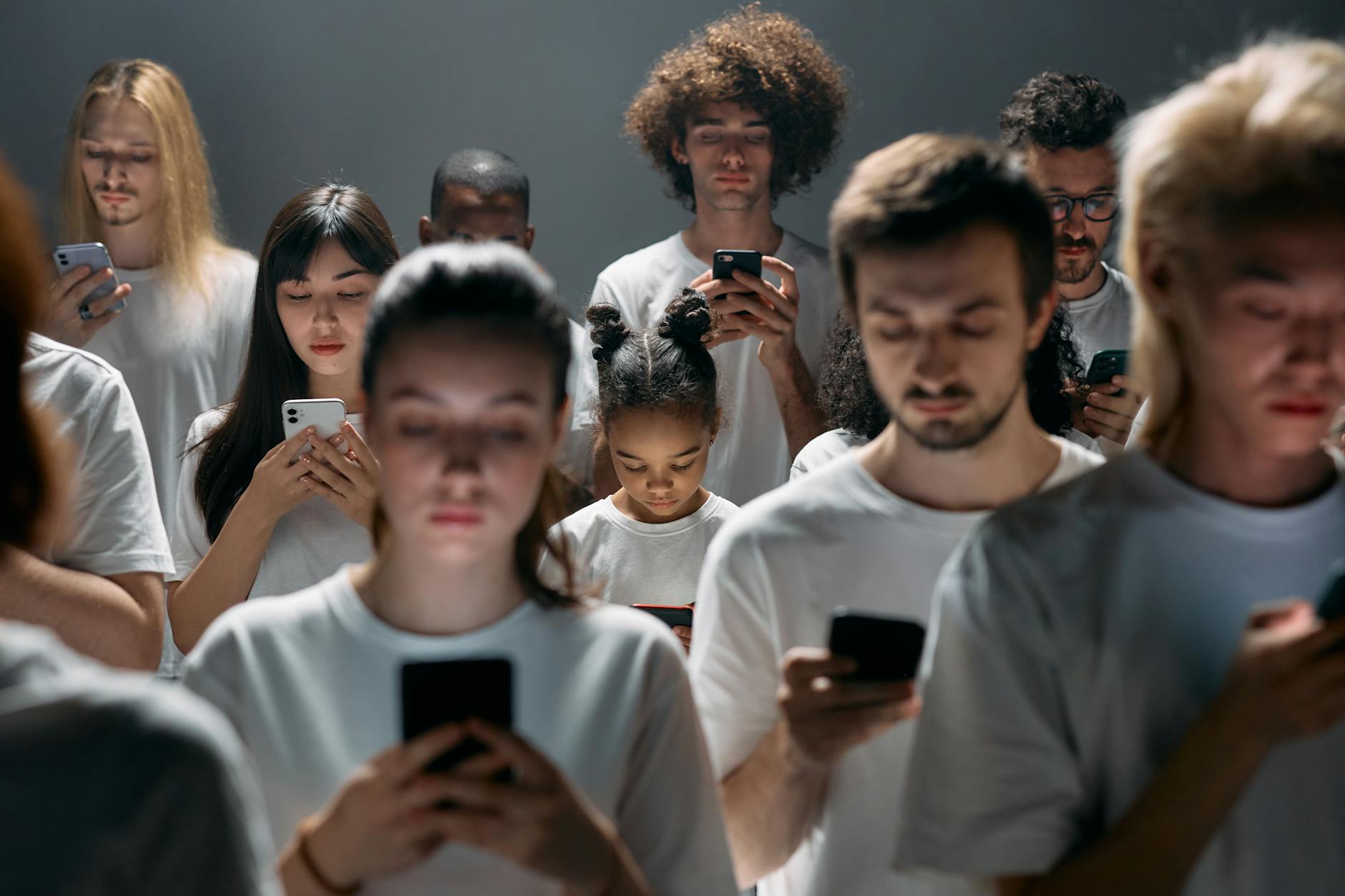
A very demure, very mindful trending audio. Scroll. The perfect fast fashion haul. Scroll. Why I’d pick the bear. . . . Scroll. Try this new hairstyle for your holiday parties! Scroll. Came all this way, had to explain, direct from . . . . Scroll. Ben Shapiro holding space for the lyrics of defying gravity? Scroll.
The modern social media landscape offers a seemingly infinite and ever-increasing content volume, hauntingly familiar to a Bradbury dystopia – real-life sea shells, thimble radios, and parlor screens. Attention spans are shrinking at alarming rates. Some experts estimate the average human attention span at around 8.25 seconds, down from 12 seconds just twenty-five years ago. Moreover, screen time in the United States now averages over seven hours, a statistic that rises by an hour in adolescents. Yet the implications of American society’s affinity for immediate, thoughtless entertainment go beyond competing with goldfish for attention span statistics. (We’re losing.) The distraction epidemic holds profound importance for flourishing governance, human well-being, and societal virtue.
Governments have long manipulated entertainment to exploit distraction as a tool for limiting dissent and maintaining political control. In his famous work The Prince, Machiavelli instructs rulers to “keep the people occupied with festivals and spectacles.” Machiavelli shrewdly calculated a pragmatic truth: preoccupied people may be managed considerably easier than engaged critical thinkers. Citizens are all too willing to sacrifice civic responsibility, political power, and the tenets of “the good life” on the altar of quick entertainment.
After all, too much thinking threatens government control. Consider how governments historically dealt with the growing popularity of coffee due to caffeine’s properties as a stimulant. The drink was banned in various regions, including Mecca, Prussia, and Sweden. Rulers feared that coffee would encourage thought and promote opposition to rulers. Some even urged increased consumption of beer, a depressant that reduces brain activity.
Beyond governmental exploitation, the landscape of distraction crafts a world of false realities that cripples human flourishing.
Seeking cheap dopamine hits afforded by likes, comments, and reshares – an addiction furthered by the unpredictable expectation of validation – keeps users glued to the pseudo-reality of social media. As networks of hundreds to thousands of pages are followed, an illusion emerges. With this friend at a party, this friend on vacation, this friend married, this friend with a new career, and so on, every person but the user seems to be living the perfect life.
The user has a choice: flee their bleak reality in the comfort of a doom scroll (escapism) or find something to post themselves (dopamine). And the cycle continues. Simultaneously, the list of negative physical and mental effects expands. Studies have tied social media use to disrupted sleep cycles, depression, anxiety, memory problems, bullying, self-doubt, and imposter syndrome.
We have built the goods our society values on appearances – false ones at that – rather than realities. Socrates addressed this issue in Plato’s Apology:
“. . . . a man who is good for anything ought not to calculate the chance of living or dying; he ought only to consider whether in doing anything he is doing right or wrong – acting the part of a good man or of a bad.”
With his life on the line, Socrates critiqued Athen’s pursuit of the appearance of truth over truth itself. And so the gadfly willingly met the flyswat.
Much of modern society is constructed through smoke and mirrors, edits and filters; we seek the appearance of beauty, excellence, courage, or justice over the goods themselves. We’ve remodeled our temples of virtue to worship the approval of others.
The tale is ancient. The scribes and Pharisees of Israel in the biblical narrative mirrored the evil of Athens, with gleefully impressive exteriors and distractedly mistaken priorities. Jesus condemned such corruption, describing these groups as “hypocrites . . . . whitewashed tombs, which appear beautiful on the outside, but inside are full of the bones of the dead and every kind of impurity.”
Yet, there is hope, for distraction is a virus with ample cure. In the hope of a new year, we can turn a page. Drink the coffee. Cut the doom scroll. Be radically present. Think critically. Challenge injustice. Pursue learning. Connect to real-life community.
Most importantly, seek goodness, grace, beauty, truth, and love, for as you genuinely pursue virtue, you may transform yourself from a tomb of the dead to a sanctuary beaming with life.