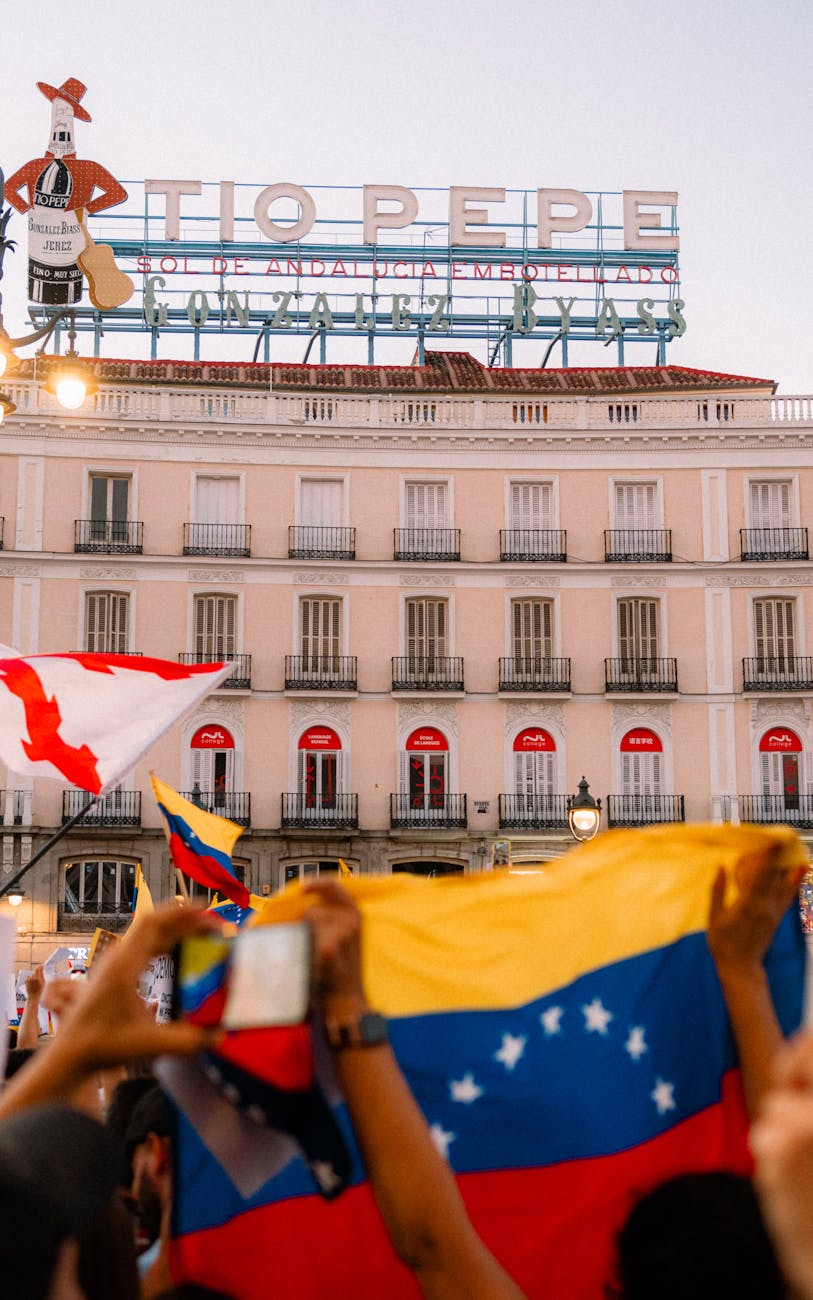
On January 3, 2026, Venezuelan President Nicolás Maduro was captured in a dramatic U.S. military operation that sent shockwaves across the Western Hemisphere. Intense debate fans the flame of controversy at home and abroad. In Caracas, New York, and Washington, people are witnessing the dramatic fall of a man long accused of authoritarian rule and human rights abuses. Thousands gathered in Doral, Florida, to celebrate Maduro’s fall and express relief.
For many Venezuelans, Maduro’s removal has felt like an overdue turning point after decades of political repression. Scenes from Venezuelan communities around the world show jubilant crowds waving flags and chanting for freedom, hope, and a new beginning. Opposition leader María Corina Machado, a Nobel Peace Prize recipient, declared that “the hour of freedom has arrived” and urged Venezuelans to seize this moment for democratic renewal.
For ordinary Venezuelans, especially those in exile, this moment carries deep emotional significance. One restaurateur in the Rio Grande Valley expressed his thoughts after the event saying, it “gave me joy … because Venezuelans are finally feeling that change is possible.”
The Western world, as always, has its own story to tell.
Within the United States, the fallout from Maduro’s capture exposes sharp political divides and unexpected ironies. A recent White House press release frames the capture as a major foreign policy success when the United States scored what prior efforts had not and brought a “narcoterrorist and socialist dictator” to justice on U.S. soil.
According to that release, many Democratic leaders who once loudly called for Maduro’s removal are now criticizing the very action they once demanded simply because President Donald Trump carried it out. The administration’s “Then vs. Now” comparisons show Democratic figures previously backing Maduro’s ouster now condemning the operation as reckless, illegal, or lacking congressional authorization.
Meanwhile, some Republicans and even a handful of Democrats called the removal a victory. A House Democrat, Debbie Schultz, described the capture as “welcome news” while still criticizing the Trump administration’s approach.
Critics argue the operation sidestepped constitutional checks and could establish a dangerous precedent for executive military action. As a precautionary measure, the U.S. Senate advanced a War Powers Resolution aimed at restricting further unilateral action in Venezuela without Congressional approval.
Internationally, reactions have been polarized. Brazil’s Luiz da Silva and Emmanuel Macron of France, among many others, condemned the U.S. action as a violation of sovereignty and international law. Others, like Argentina’s president Javier Milei, welcomed Maduro’s fall as liberation from tyranny. The United Nations Security Council has been called to debate the crisis, and U.N. Secretary-General Antonio Guterres expressed alarm over “the unilateral use of force to commit an act of aggression.” International institutions are designed to preserve order first, even over authoritarianism.
It’s striking how often debates in Washington and Western capitals seem detached from the voices of Venezuelans themselves. For those living outside the U.S., scenes of protesters in front of the White House decrying Maduro’s capture can feel surreal. These protestors march with the comfort of stable homes, boots, and backpacks in a country among the world’s wealthiest. The ease of outrage, a lesson for the politically involved, often obscures the absence of lived consequence.
This moment highlights a perennial issue in international discourse: The tendency of commentators and activists to project frameworks onto crises they scarcely understand. Whether from geopolitical analysis or moral outrage, there’s often an assumption that Western observers inherently know better than those living through grinding hardships under autocratic rule.
This dynamic isn’t new. Throughout the 20th century, Western powers made similar claims to moral leadership as they intervened — rightly or wrongly — in countries like Cuba, China, and others, often with mixed results. The narrative of the Western self-appointed guardian persists. At times, we fail to acknowledge the complexity of local agency and the legitimate aspirations of the people most affected.
From an ethical and moral perspective, the capture of a dictator prompts deeper questions about freedom and human dignity. Scripture reminds us repeatedly that rulers who oppress the vulnerable will face divine judgment (e.g., Isaiah 10; Psalm 72). But that anticipated ending does not necessarily justify a nation’s efforts to render human judgment on earth.
Biblical ethics emphasize that freedom must be ordered toward the flourishing of all, and that is a noble pursuit of any institution. The question remains, however, does having the ability to save a vulnerable group of people make it a nation’s responsibility to do so?
Just because a nation intends to do justice does not mean it will execute that intention well. Liberation without justice risks becoming another form of domination. The challenge, both morally and practically, is ensuring that the end of tyranny becomes the beginning of justice. Figureheads are only the first step. In Venezuela’s case, genuine freedom will require robust institutions and the unfiltered voice of Venezuelans themselves. Systems of corruption must be patiently and carefully rebuilt.
As the dust settles and Venezuelans begin to shape their own future, one collection of voices must remain central: Venezuelans — those scattered around the world who have lived under Maduro’s rule now yearn for peace.
Freedom is neither guaranteed nor geographically confined. Apathy, bureaucratic stagnation, moral cowardice, and the slow erosion of truth are the things most threatening the developed world. If Maduro’s fall reminds the world of anything, it is that freedom must be continually defended and renewed.