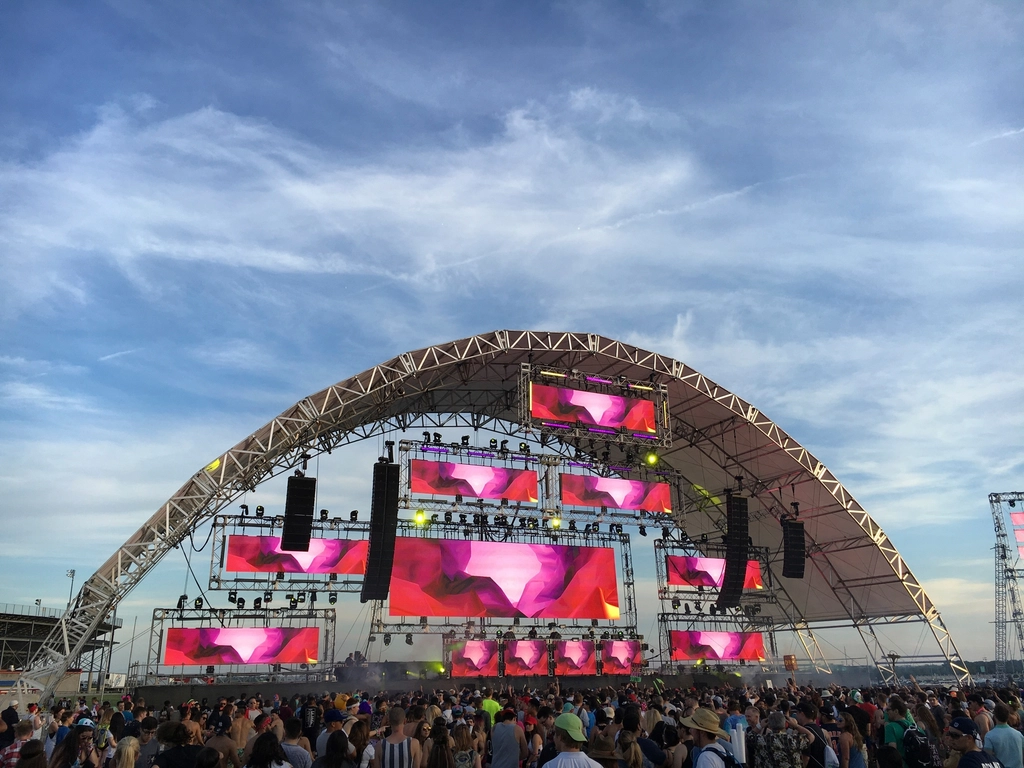
Milwaukee, Wisconsin is famous for a handful of things, including breweries, brats, and its annual lakefront music festival, Summerfest. First held in 1968, a year before the iconic Woodstock music festival, Summerfest was a 10-day long celebration of music.
Bands played throughout the city, while additional events, including film screenings and air shows, complemented the special occasion. Summerfest’s attendance peaked in 2001, when it hosted over 1 million attendees. Among its list of featured acts from throughout the years are performers ranging from Johnny Cash to Britney Spears. Businesses shut down for the week-and-a-half-long festival, doctors and dentists would take off, and all of the best restaurants would be at the lakefront, selling their Summerfest specials.
Unfortunately, Summerfest has seen a sharp drop in attendance since 2020, when the festival was cancelled in its entirety due to the pandemic. Between 2019 and 2021, the number of attendees fell from 718,000 to 409,000 – more than 55%. A portion of the decline in attendance was due to the format change, as those years saw the festival go from a solid 11-day block to a series of 3 consecutive weekends loosely themed to different genres. Summerfest went from a city-wide celebration to a niche afterthought.
Many people have correctly pinpointed 2020 as the year when American culture fundamentally changed. Due to lockdowns and the scam of forced “social distancing,” people were disconnected from broad public spaces. The only social settings available were online, and these online communities urged people into increasingly fragmented groups.
When Elon Musk bought Twitter in 2022, he renamed it to X and changed the platform’s design to allow for more free speech. This, in turn, led to a growing number of conservative users on the platform because they no longer feared censorship. In early 2024, the platform Bluesky opened to the public as a liberal alternative with much stricter speech guidelines. Since the two platforms have launched, there has been less cross-political discourse.
People are typically more comfortable when surrounded by people they believe are similar to them. Public spaces, like offices, grocery store lines, or movie theater lobbies, encourage people to have conversations with those they might not otherwise get a chance to speak to. However, as those public spaces were surrendered during the pandemic, people became accustomed to only interacting with others whose beliefs were entirely aligned with theirs. These interactions go far deeper than simple common features such as sharing religious values or similar views on the city government, though. Internet chat rooms and social media allowed people to become obsessive about anything from 20th-century Ukrainian animation to non-conformist gender identities.
As a result, the American monoculture has fallen apart. It’s rare that everyone goes out to see a new movie. It’s rare that everyone is listening to a new hit song because they think it’s catchy. It’s rare that everyone is reading the same book, flipping through the same magazine, or talking about the same funny Saturday Night Live sketch.
The death of the monoculture has inevitably led to the death of the music festival. Summerfest is a perfect example because it butchered a week-long tradition that drew in attendees from all walks of life. Instead, it settled for a handful of short weekends designed to draw in country fans, old-school rockers, or pop aficionados. People don’t take a week off from work, and businesses don’t shut down to spend the week listening to music from a variety of genres. It has no cultural impact, it inspires no creativity, and it further severs the community.
Almost all modern music festivals are ghosts of their former selves. The appeal of most major musical festivals up through the mid-2010s came from their lineup of diverse, noteworthy music acts. Festivals like Bonnaroo, Lollapalooza, and, of course, Coachella, became immensely popular because they had enormous lineups, filled with musicians that people were interested in. In recent years, these festivals have relied more on their headliners than showcasing a multitude of creative talent. Whereas headliners were once a perk to an already fun event, headliners are now the entire selling point of the festival.
Weaker lineups become a significantly greater problem when rising ticket prices are factored in. In 2005, Lollapalooza’s basic two-day tickets cost $35. In 2025, a single-day pass for Lollapalooza was around $192. An average pass to Bonnaroo is about $480, and an average ticket for Coachella Weekend 1 was $649. Food and beverages at Coachella are also priced disproportionately high, with some guests reporting that two slices of pizza and a soda were $41 and a coffee was $17. The cost of staying at a nearby hotel also adds thousands of dollars to the cost. Modern-day musical festivals are pricing out a majority of fans from attending.
In the past few decades, music festivals have removed their mass appeal and their accessibility. In 2026, most of these festivals’ target demographic are influencers. People flock to Coachella in droves merely to post photos of their outfits and a blurry photo of Justin Bieber. The passion for music is no longer the unifying ethos; instead, music festivals appeal to a niche group of content creators.
What I love about music is that it brings people together. If you’ve ever watched a jazz band in New Orleans, heard someone pick a guitar at a bar in Austin, or watched a room full of people yell in excitement when “Piano Man” comes on, you know the power of music. Today, music festivals attempt to divide audiences, whether it’s through their lack of musical diversity or their pricing structures. The modern music festival doesn’t represent a community celebrating good and beautiful art; it represents a culture that has lost its identity.