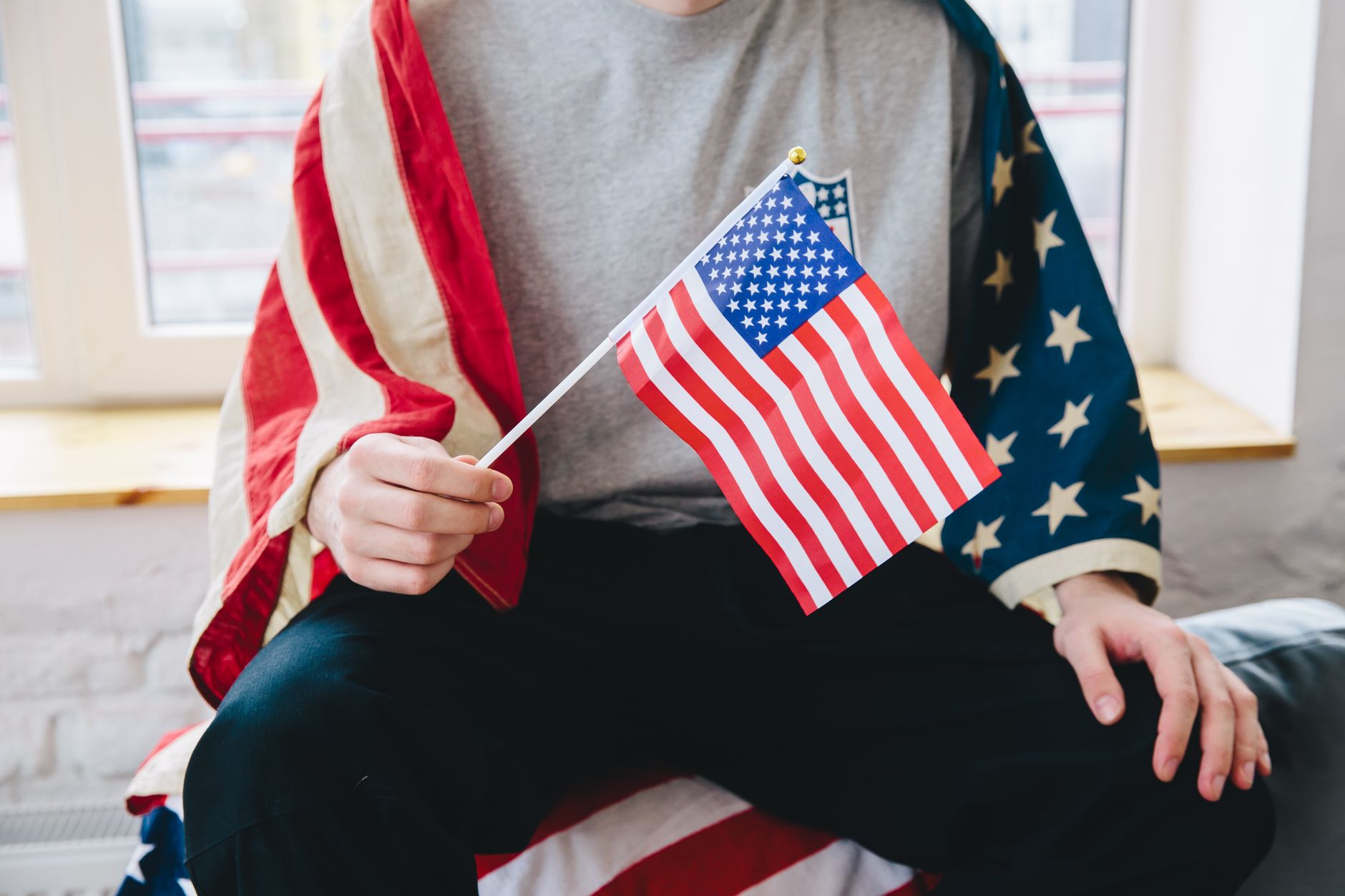
America is approaching her 250th birthday.
A nation does not reach a quarter millennium by accident. It survives because generations before us believed there was something worth preserving, defending, and passing down. They built towns, churches, families, schools, and civic institutions. They fought wars, buried sons, raised children, and sacrificed comfort for inheritance.
That inheritance now stands before us. The 250th anniversary of American independence is a national mirror, forcing us to confront what we’ve received, what we’ve neglected, and what we’re prepared to restore.
That is why 2026 is the Year of the Patriot.
Every generation faces its own test. The Founders confronted empire; the Civil War generation, disunion; the Greatest Generation, depression and war; and the Cold War generation, communism. Our generation faces a quieter but no less serious question: Will Americans still act as though they have a country to inherit?
That question now defines the moment. It reaches into our schools, churches, borders, economy, families, towns, and politics. It’s present wherever Americans feel the distance between the country they were taught to love and the country they now see. Something precious has been mismanaged, mocked, weakened, and sold off by those entrusted to protect it.
A patriot loves his country the way a son loves his family. He knows its history, failures, wounds, and glory. His love is clear-eyed because it is rooted. A son can see his father’s flaws and still honor him. A man can see his home in disrepair and still refuse to abandon it. The deeper the love, the stronger the obligation to restore what has been damaged.
That is where many Americans are today. They love their country, but they do not always recognize it. They see schools that no longer teach children to admire the civilization they inherited and the pioneers who built it. They see corporations treating workers as disposable. They see communities hollowed out by addiction, outsourcing, broken families, mass migration, and a ruling class that speaks endlessly about democracy while ignoring the people whose families built this nation generations ago.
This is why patriotism has become urgent again.
That renewed spirit surfaced even in American athletics. At the Winter Olympics, the U.S. men’s hockey team defeated Canada for gold, with patriot Jack Hughes delivering the overtime winner, giving the country its first men’s Olympic hockey title since 1980. Team USA set a new American record with 12 gold medals. Pennsylvania native Mason Miller is the best closer in baseball and pitched 34 2/3 consecutive scoreless innings behind a 104mph fastball. Justin Gaethje stood on the White House lawn at UFC Freedom 250, battered and relentless, winning the lightweight crown in a scene worthy of the patriotic spirit defining America’s 250th year.
Those moments matter because sports reveal something about the national spirit. When an American team beats Canada for hockey gold, it reminds us that national pride is still alive. American excellence still matters. Courage, discipline, toughness, and the desire to win remain patriotic virtues.
For years, many Americans assumed patriotism would sustain itself. We assumed love of country would reproduce naturally, that children would inherit gratitude through osmosis, and that flags, anthems, holidays, and flyovers could carry the weight of national memory. But affection without formation fades. Memory without teaching disappears. A people who do not know their own story will eventually accept someone else’s.
That is exactly what has happened across much of American life. The founding is treated as hypocrisy. The pioneers are treated as villains. The Constitution is treated as an obstacle. The Christian moral inheritance that shaped our civilization is treated as a fable, and the ordinary Americans who built and defended the country are treated as relics standing in the way of progress.
A serious patriot rejects that lie.
America’s greatness rests on the principles and people who made self-government possible. The Declaration was a statement about political legitimacy. It declared that a people are not livestock for distant rulers, managers, and bureaucrats. They are citizens capable of self-government under the one true God.
That idea remains revolutionary. And for America 250, it gives rise to the defining question: Are Americans still capable of self-government?
The answer will be found in homes, schools, churches, county parties, school boards, state legislatures, local businesses, and forgotten towns where ordinary Americans decide whether they still possess the courage to govern themselves.
Self-government requires self-control. Liberty requires being virtuous in the eyes of the Lord. A free country cannot survive when families collapse, communities dissolve, faith is mocked, men abandon responsibility, and the nation is reduced to an economic zone.
That is why the patriot is the necessary figure of 2026. The patriot knows what’s at stake.
The patriotic life is lived far beyond Washington. It is lived in pockets across the nation where forgotten communities and extraordinary Americans labor to preserve what remains. A republic belongs to the people only when the people are willing to act like owners.
America is a real nation, with a real people, a real history, real borders, real towns, real graves, and real obligations. To inherit a country is to receive a trust. Previous generations handed us more than monuments and documents. They handed us a civilization that must be preserved, repaired, and handed down.
2026 is the Year of the Patriot because this anniversary has arrived at precisely the moment America needs patriots again. It comes at a time when national memory is contested, self-government weakened, communities fraying, borders treated as optional, faith mocked, families strained, and ordinary citizens are being asked whether they still believe this country belongs to them.
The answer must be yes.
The patriot looks at the nation and sees a home worth healing. He looks at decline and sees work to be done. He looks at the inheritance of 1776 and understands that he, too, is 1776.
This is still our home, patriot.
And this is the year to act like it.