In San Francisco, people of all ages can buy, sell, and inject hard drugs out in the open. People can freely set up homeless encampments on the street or defecate in public. And criminals can freely shoplift and loot so long as the stolen goods does not exceed a certain amount. These are examples of uniquely urban problems, and they are the culmination of the Progressive rejection of the Christian idea of the Fall as well as the desire for man to become just like God.
When Adam’s eldest son Cain murdered his brother Abel, Cain went on to establish the first ever recorded city in Genesis 4. Eventually, man becomes so wicked that after ten generations, God decided to destroy the earth with a global flood, only preserving Noah and his family. After the Flood, as Noah’s descendants repopulate the earth, they come together to build a large city with a tower that extends up to the heavens. Recognizing their prideful ambitions and desire for power, God confuses the people’s languages and scatters them all over the world, thereby halting the construction of the Tower of Babel.
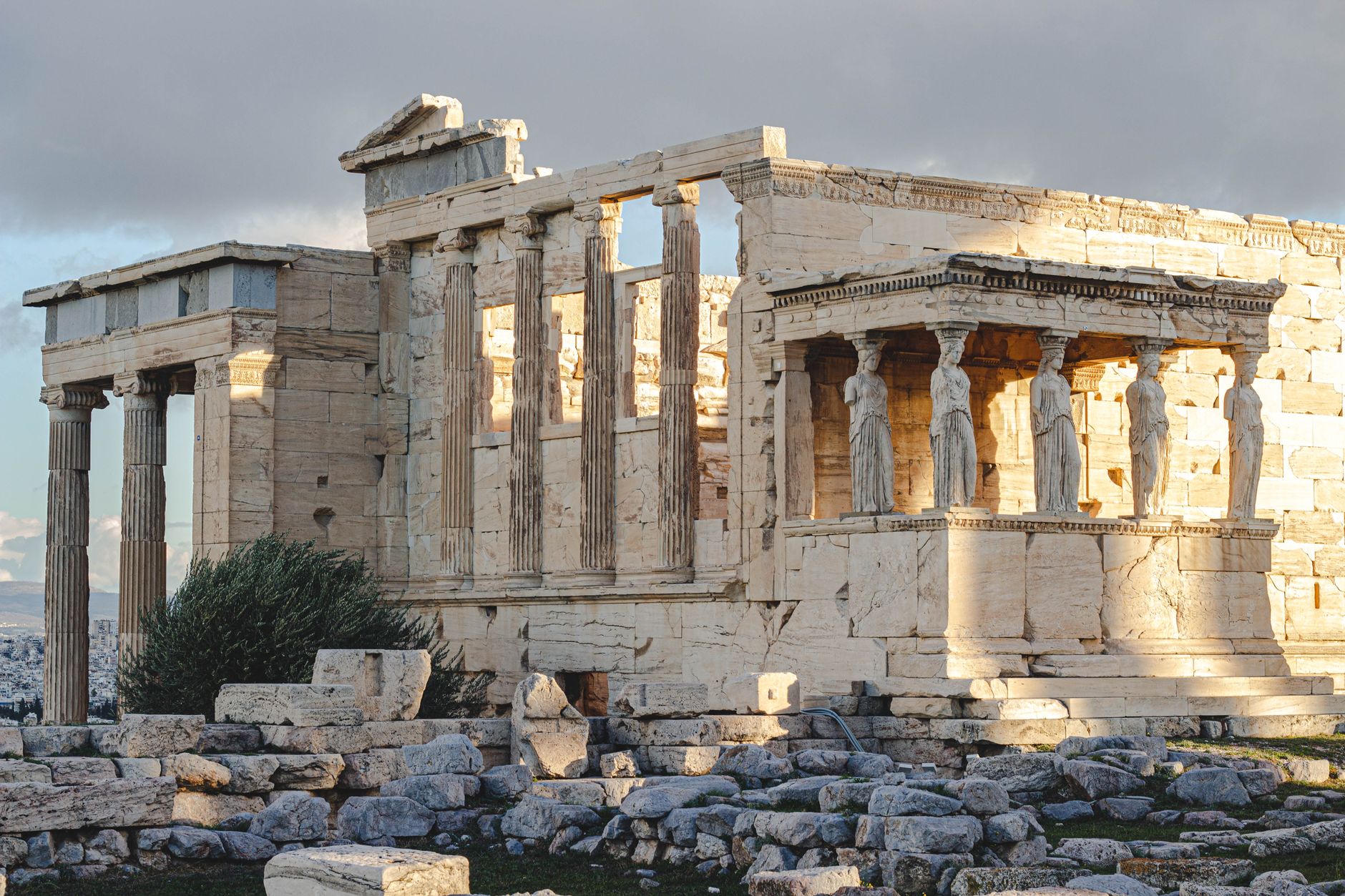
The track record of Biblical cities is not impressive. Why is it that Biblical cities like Nineveh, Babylon, Samaria, and Athens are symbols of ungodliness and immorality while the Messiah comes to the world in a remote stable in Bethlehem?
By nature, cities are large groups of people in tightly concentrated areas. When humans are in close proximity to one another, their nature is amplified, meaning the best and worst of humanity are brought out. For instance, the density and diversity of a city help humans to harness their creative and intellectual potential to create remarkable advancements in society and culture. It is no surprise that cities like Rome, Los Angeles, Paris, and New York City are epicenters of art, entertainment, science, technology, etc.
On the other hand, greater numbers of sinful people in close proximity to other sinful people breeds more sin. The inherent nature of sin is such that its appetite is never satisfied. Like a grain of yeast, it continues to multiply and infect everything around it if left unchecked. The drive to innovate and compete can lead to an obsession with achievement. Humans become prideful and seek to “make a name for themselves” without the help of and in defiance of God.
As noted earlier, the vision of progressivism fits perfectly with man’s inclination to oppose God and achieve “apotheosis” – god-like control of the created order. In the words of John Burgess, a progressive political scientist, the goal of a progressive government is the,
“…perfection of humanity, the civilization of the world; the perfect development of the human reason and its attainment to universal command over individualism; the apotheosis of man…”
The progressive worldview, which prioritizes mankind’s liberation from the constraints of natural law and morality, is inherently sinful.
Large cities in America today are epicenters for drugs, sexual promiscuity, crime, and homelessness. Take San Francisco – a city that has been run by Progressive Democrats for decades. The city has become notorious for allowing open-air drug markets and people of all ages to shoot fentanyl and meth on the streets. The government has even authorized the creation of “supervised injection sites” where addicts and homeless people can inject hard drugs safely with the supervision of workers.
The San Francisco government has not only been soft on drugs, but also on crime. In 2014, California passed Proposition 47, which classified stealing merchandise worth $950 or less as a misdemeanor. That has caused a rise in shoplifting across San Francisco, since people know that police officers will do almost nothing, and prosecutors will let shoplifters go if caught so long as the amount of theft is below $950.
Stores like Walgreens and CVS have been forced to close multiple locations in the city because of the prevalence of shoplifting. Ironically, while progressives believe in an all-powerful government to heavily regulate many areas of society and people’s lives, they simultaneously value licentiousness—the unlimited freedom to pursue worldly pleasures and vices.
Historically, the best check against man’s sinful inclinations has been Christianity, the practice of which is facilitated through houses of worship like churches. Sadly, the increased urbanization of America has brought a decrease in the number of churches as well as people adhering to a Judeo-Christian worldview.
For instance, the Sacred Spaces Conservatory reported that in Washington D.C., the number of houses of worship had declined from 763 in 2008 to 511 in 2023. According to the Boston Globe, in recent years roughly a dozen Black Protestant churches have left the city of Boston. Researchers interviewed by the Washington Times cited the high cost of living, crime, and increased demographic diversity as reasons for houses of worship moving away from large cities. One of the researchers, Ryan Bruge, a political scientist and religious demographer from Eastern Illinois University, explained where churches are going instead,
“Over the last 10 years, the 100 fastest-growing churches in America are primarily in the growing inner- and outer-ring suburbs of major cities. With fewer religious institutions and houses of worship in large cities, there is less opportunity to get involved in church, which naturally leads to a decline in Christian affiliation and religious morality altogether.”
People in the cities, however, will still worship something. The late Pastor Tim Keller wrote that,
“Cities are always the hotbed of religious cults. They are inveterately religious. Every city is dedicated to a god – even if it is the secular ‘religion’…Protestant Christians abandoning the city inevitably make it easier for the city to turn to false gods.”
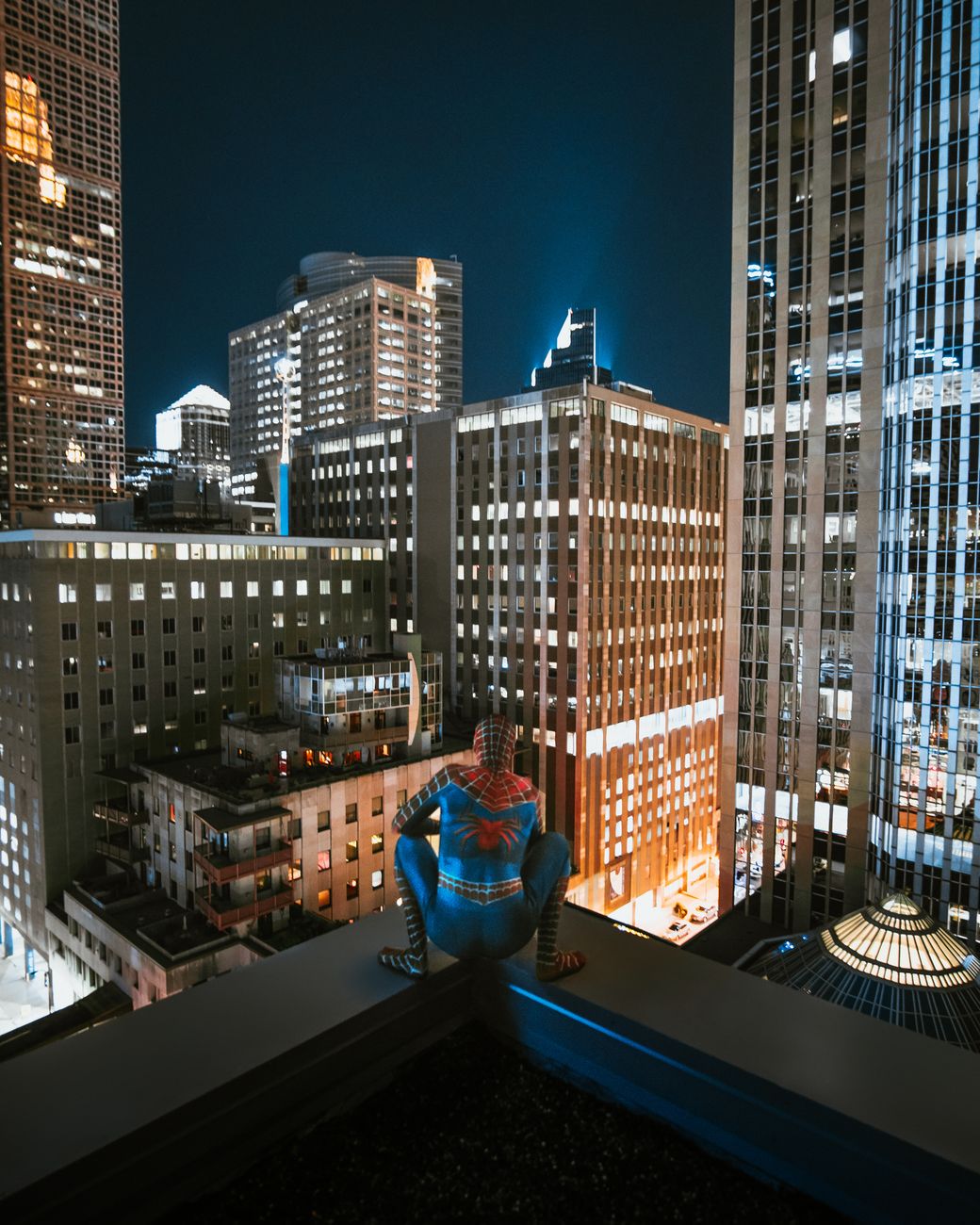
In ancient times, most cities were built around ziggurats — tall temples where specific gods were believed to descend to mankind. Today, ziggurats take the form of corporate skyscrapers in cities like Los Angeles and New York City, which symbolize the idolatry of wealth, power, and material possessions.
Urbanized areas are conducive for mankind to feed its sinful desires, which is partly why cities have generally become more progressive over time. Is it feasible for our society to have a righteous city?
The book of Revelation does prophesy that at the culmination of the end times, God will establish the New Jerusalem, which will be a perfect place free of evil, suffering, and death. The problem is that the New Jerusalem is not governed by mankind, Christ is the ruler of that city. The only city where we will be truly “like God” is the New Jerusalem where Christ is our ruler for all Eternity. Until then, sin and the sirens call of progressive ideology will remain.