It is no exaggeration to state that the future of America hangs in the balance. Whether our nation will enforce border security, achieve economic prosperity, protect the innocence of children, and uphold our constitutional liberties will depend in large part on what happens on November 5.
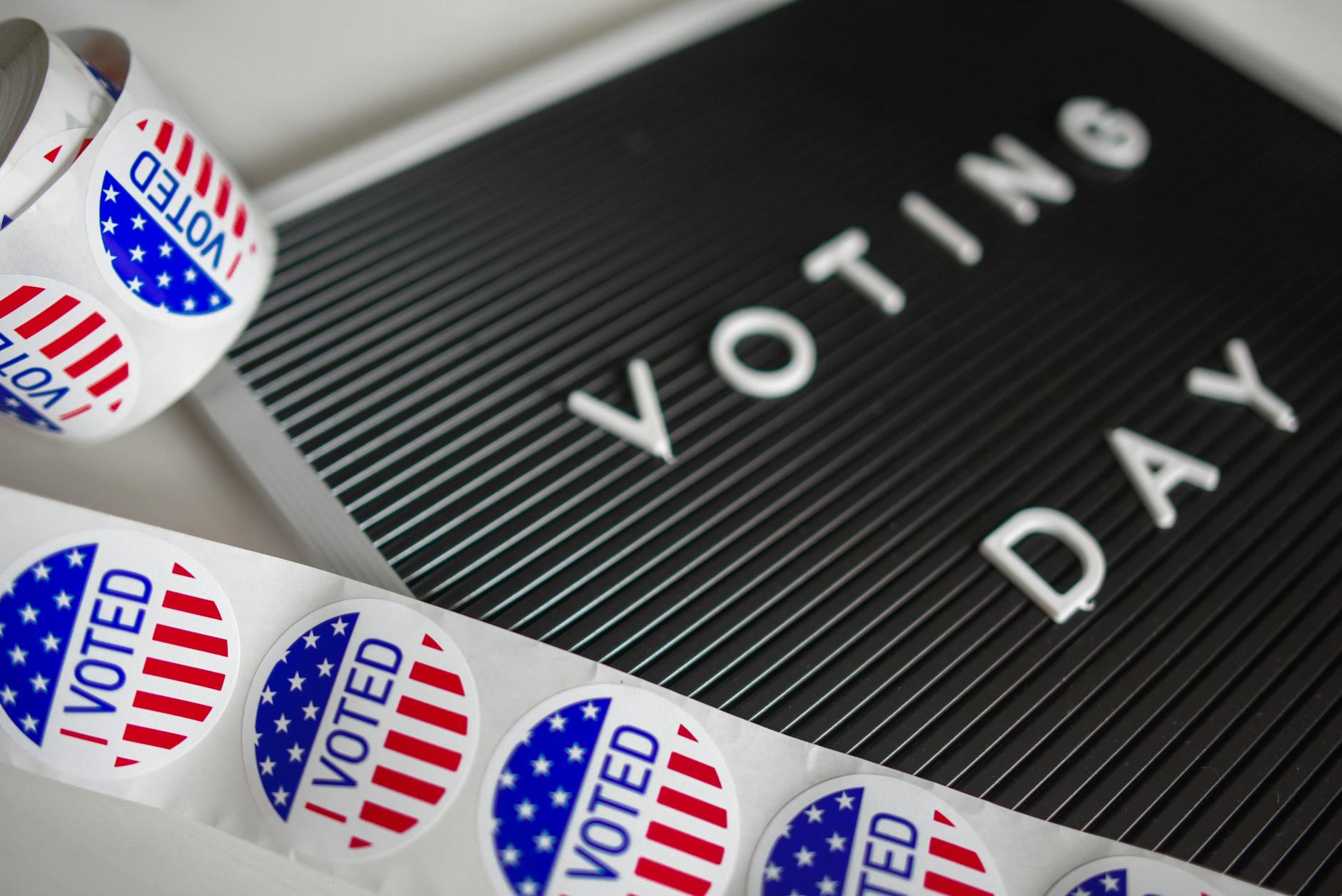
With less than four days until the 2024 presidential election, tens of millions of Americans have already cast their vote for their preferred candidates in numerous federal, state, and local political positions, and millions more will go to the polls over the next couple of days. Simultaneously, however, tens of millions of people will stay at home.
America’s voter turnout continues to pale in comparison to many countries. In 2022, the Pew Research Center analyzed voter turnout from the 2020 U.S. election and contrasted the data with the recent general elections of 49 other nations from 2018-2022. The results showed that America ranked 31st out of 50 nations, with a voter turnout of 62.8%. For decades, around one-third of eligible voters have chosen not to vote in presidential elections, and the number has risen to more than half in the midterm elections. Sadly, low voter turnout is prevalent among people of faith.
According to MyFaithVotes, 1 in 3 Christians do not vote consistently, and roughly 25 million Christians who are registered to vote fail to vote in presidential elections. This month, new research from the Cultural Research Center at Arizona Christian University found a disturbing trend heading into November. Research Director George Barna projected that 104 million people of faith will likely abstain from voting in the 2024 election, including 41 million born again Christians and 32 million regular Christian church attenders. One of the several reasons people cited for staying home, according to 52% of those surveyed, was that they believed their vote would not make a difference.
Numerous swaths of the American citizenry believe their participation in their electoral process does not matter. I have thought about this issue myself as a conservative Christian living in California, a deep blue state. My state’s electoral college votes will almost inevitably go toward the Democratic presidential candidate, and many times, my vote for conservatives running for other federal, state, and county-wide positions fails to prevent left-wing Democrats from gaining or retaining political power. What significance, then, is my individual vote among millions of others? Why waste time to cast a ballot that will not really affect the outcome of an election?
The reality is voting matters because it is one’s civic duty. After winning the Revolutionary War and declaring independence from Great Britain, our nation’s founders created, through the U.S. Constitution, an unprecedented system of government—a constitutional republic in which the citizenry, “We the People,” are the sovereign. Instead of unaccountable monarchs, the nation would have political leaders who are elected by the people and represent their interests. Many men and women have sacrificed their lives for our precious freedom, so we owe it to them to exercise the right to vote. On the last day of the Constitutional Convention in September of 1787, when asked what government system the delegates formed, Benjamin Franklin famously remarked, “A republic, if you can keep it.” Franklin’s words highlight every citizen’s critical responsibility to protect the American republic’s peace, prosperity, and liberty. One crucial way to do that is voting. By participating in the political process, we have the opportunity to elect into power those who value our founding ideals and pass laws that serve the interests of the public–including rooting out the corrupt politicians who only seek power and their own selfish ambitions.
For the believer, the timeless wisdom of scripture also gives credence to the notion that voting matters. Jeremiah 29:7 (ESV) states, “But seek the welfare of the city where I have sent you into exile, and pray to the Lord on its behalf, for in its welfare you will find your welfare.” This principle is as applicable to Americans today as it was to the Israelites living in Babylonian captivity. In the New Testament, Jesus tells His followers in Matthew 5 that they are the salt of the earth and light of the world, implying a mandate to influence all realms of society, including politics, for the Kingdom of God and to stop evil wherever it resides. The welfare of a nation and a city is closely tied to its laws, which are, in turn, linked to the ones in political power. Therefore, it is incumbent upon us to vote for candidates who will legislate policies that align with conservative and biblical values. Proverbs 29:2 (NKJV) says, “When the righteous are in authority, the people rejoice; But when a wicked man rules, the people groan.” While God is sovereign and ultimately in control of the outcomes, we are still commanded to take personal responsibility. Pastor Jonny Ardavanis articulated in a recent sermon,
“A failure to vote is a failure to express our gratitude to the men and women that have died for our country and given us the freedom that we have today. It’s also a failure…to obey the calling that we have to uphold the righteousness in our land.”
He could not have stated it any better. Americans have a duty to God and the nation to exercise their right to vote. It is not purely about the results. Even if left-wing candidates win every single race, we still vote because it is the right thing to do.
Having said that, contrary to what a lot of people may think, our votes actually do have an effect on elections. At the federal level, the presidential election is heavily influenced by certain “swing states” in which the margins of victory can come down to just tens of thousands of votes. This is why George Barna, in his analysis of the research earlier, emphasized that the millions of Christians who are set to stay at home for the 2024 election are a “game-changer.” Of course, the presidency is not the only office up for grabs in the election—there are numerous other federal, state, and local positions. And for those races, the margins get even smaller, from a few thousand to less than a thousand to even less than a hundred in some cases. In the 2022 midterms, for instance, one of my county’s city council races was decided by just 30 votes. If the millions of eligible but disengaged voters recognized the true impact of casting their ballot and participated in voting for the right candidates, the election would shift massively, and our nation would likely be better off.
So yes, your vote does matter for the election, for the country, and for God. Therefore, do your due diligence as a United States citizen this November. Do not stay at home. Dedicate time to fill out your ballot and go to the polls. Vote biblically, conservatively, and practically for the best options you have. Let us do our part to uphold righteousness, peace, and prosperity in our constitutional republic while remembering that the ultimate outcome is in the hands of Almighty God.