“Put Christ back in Christmas.” A phrase we, in recent times, have heard incessantly every December, approaching the holiday season. This past year, the phrase became so infamous that it was parodied in Season 4 of Amazon’s “The Boys” (I do not recommend any readers watch the show itself).
Chances are, if you attended church during Advent this year, at least one of the sermons/homilies you witnessed was about putting Christ “back in” Christmas. However, in the last month, as I navigated the holiday season, I saw no lack of Christ. Truly, Christ is just as present during Christmas as He is year round (as the Word is ever-present), meeting us on Earth through His divine light and the Celestial Hierarchy just as He does physically within each mass.
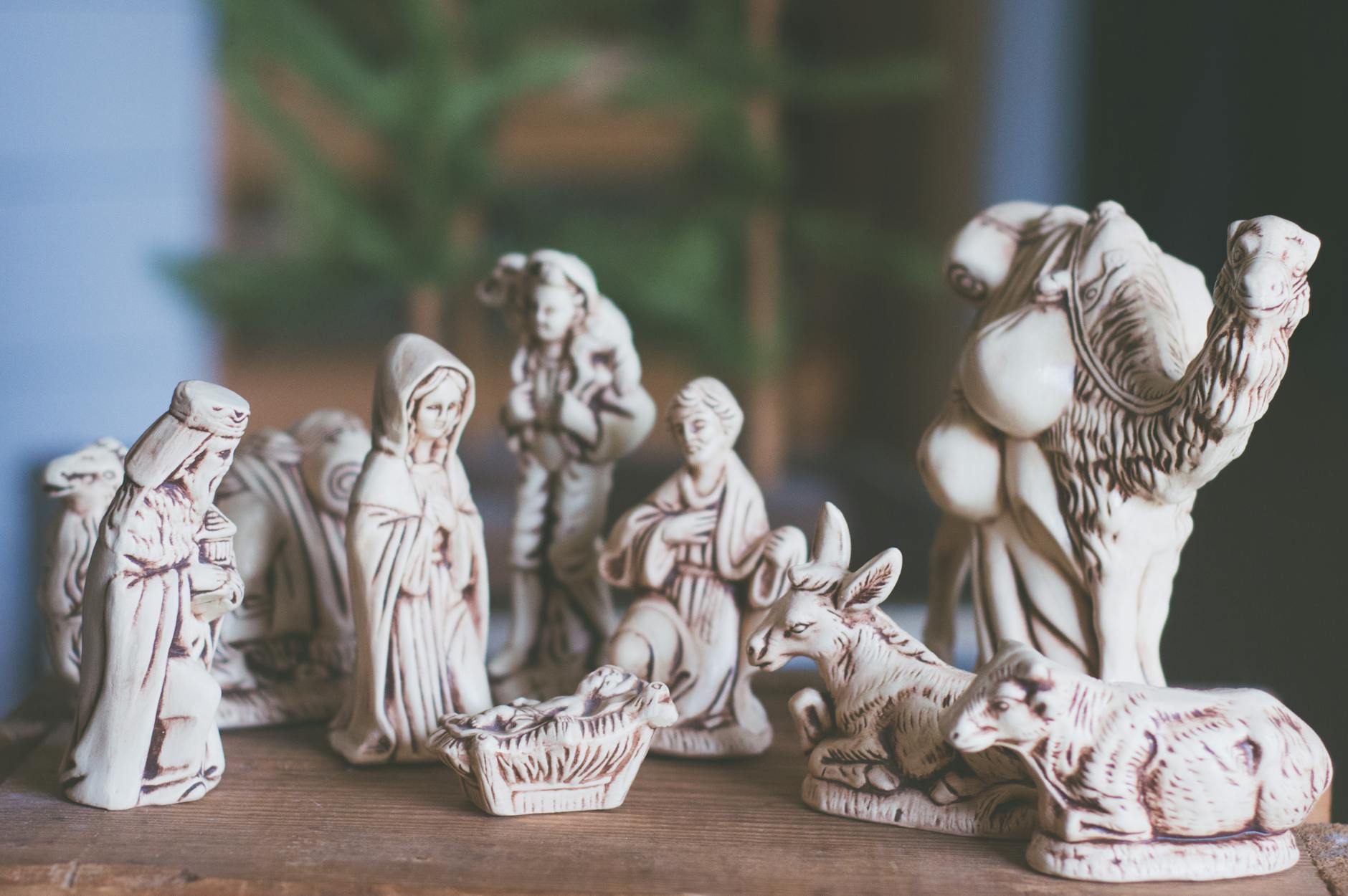
And, outside of the spiritual, as I took time to appreciate the holiday festivities around me, I heard the name of Christ ring out within the song of secular Children’s choirs; in every sign that dared to adorn itself with the word “Christmas,” in fact, His name was there. And, most impactfully, Christ was pictured as an infant in all seven nativity sets that graced my grandmother’s living room, and in every crèche placed upon each window of the parish I was visiting in Atlanta. Not ubiquitously present, however, were the ox and donkey.
In 1223, St. Francis of Assisi created the first-ever nativity scene in Greccio, Italy. Though this is where our tradition began, the first nativity scene looked very different from the statues and stables that we may be used to. It was, in fact, a mass adorned with live actors portraying the Holy Family. The knowledge that we have of this event comes from St. Bonaventure in The Life of St. Francis. He writes,
“He had a crib prepared, hay carried in and an ox and an ass led into the place. The friars are summoned, the people come, The forest resounds with their voices and that venerable night is rendered brilliant and solemn by a multitude of bright lights and by resonant and harmonious hymns of praise. The man of God [St. Francis] stands before the crib, filled with affection, bathed in tears and overflowing with joy. A solemn Mass is celebrated, with Francis as deacon chanting the holy Gospel. Then he preaches to the people standing about the concerning birth of the poor King, whom, when he wished to name him, he called [him] in his tender love, the Child of Bethlehem.”
Though I could extrapolate on many parts of this short passage (from a greater, beautiful text worth the read); the friars mimicking the choir of angels, the miracle of emotion, the manger standing in place of the altar.
For the purpose of this article, I would like to focus on the specific mention of the Ox and the Donkey. Within St. Francis’ creche, the animals serve a symbolic purpose much larger than the stable atmosphere; instead, the Ox and the Donkey are a specific reference to a passage in Isaiah 1: 2-4. It reads,
“Hear, O heavens, and give ear, O earth; for the Lord has spoken: ‘Sons have I reared and brought up, but they have rebelled against me. The ox knows its owner, and the ass its master’s crib; but Israel does not know, my people do not understand.’ Ah, sinful nation, a people laden with iniquity, offspring of evildoers, sons who deal corruptly! They have forsaken the Lord, they have despised the Holy One of Israel, they are utterly estranged.
In the context of this verse, the Ox and the Donkey become symbols of reverence and recognition for and of our Lord, moreover, in the context of the first nativity, symbols of the Christians who celebrate with exaltation the recapitulation of man in Christ. And so, though the stable scene we are all so used to may not have been exactly what the birth of Jesus looked like (a story for another article, perhaps), the imagery imbued within it should remind Christians of the necessary attitude we should take when viewing it.
To conclude this thought, the Ox and the Donkey are important, but I’m not just here to be scrupulous about nativity scenes; perhaps, our abandonment of the symbol within the creche which represents ourselves is symbolic of a greater phenomenon.
The phrase “put Christ back in Christmas” is rooted in virtue, but, as previously alluded to, it doesn’t quite hit the nail on the head. Just as we have removed the Ox and the Donkey from the nativity scene, so have we removed ourselves from the nativity – not Christ – celebrating instead the calendar date and paid vacation that comes with it, while Christ continues just as present as He ever has been.
Although most symbols associated with the holidays are deeply rooted in the historical Christian cannon, we’ve come to associate things like Christmas trees, candy canes, and Santa Claus with gifts, sugar highs, and reindeer instead of the mass conversion of the pagans, the dual nature of Christ, and using all of our inherited wealth to save our neighbor’s daughters from being sold into prostitution (lest you think this is out of left field, it’s the legend of the Christmas stocking).
And, indeed, this is true year-round, as I am aware we are now at the end of February. Christ is present on earth every day of the year. Through His incarnation, we have the opportunity to be reborn and remade in His image, rather than the image of Adam.
Live the Christmas spirit every day, as His incarnation continues every day since His birth. Do not let the merriments of life distract you from the miracle of the God-man; do not withdraw yourself from the nativity.