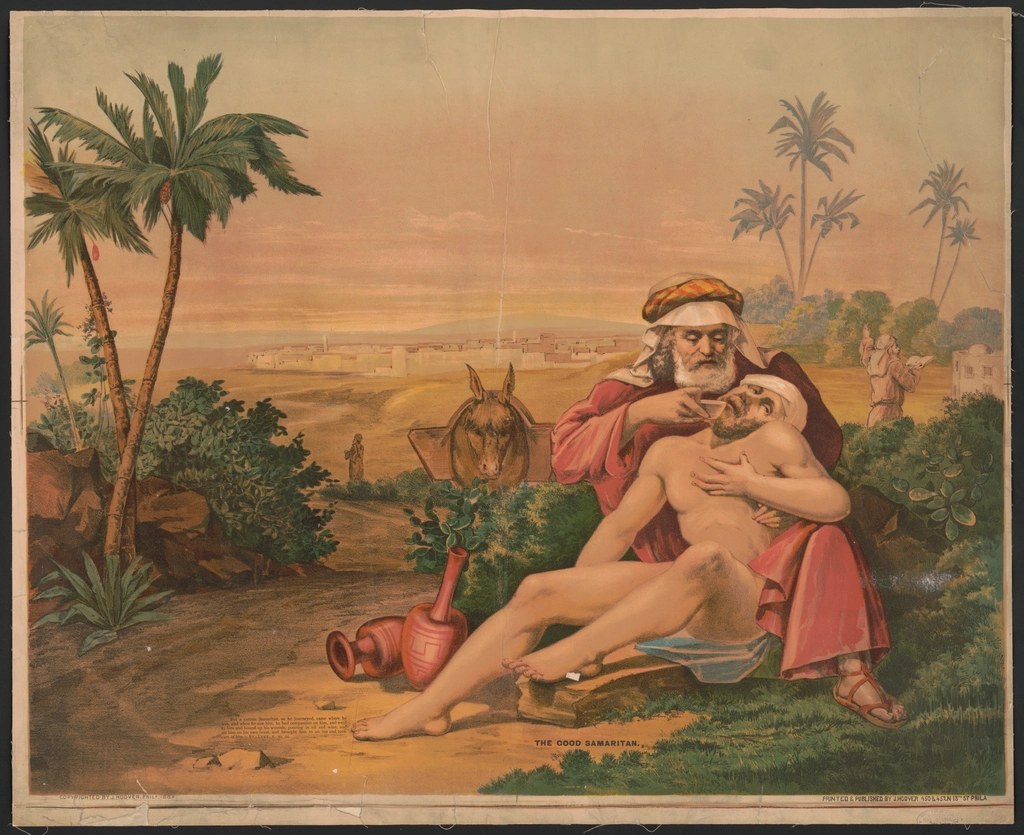
Who would a Good Samaritan look like in Manhattan? As one of 2024’s most publicized trials comes to an end, he looks a lot like Daniel Penny.
Penny was recently found not guilty of criminally negligent homicide in the 2023 death of homeless man Jordan Neely, who died after an altercation with Penny on a Manhattan F train. After witnessing Neely behaving erratically and threatening others on the subway, Penny, a former Marine, put Neely in a chokehold for several minutes, while several bystanders also assisted in restraining Neely. Penny would go on to become the focus of a trial sparking a national conversation about vigilante justice, race, and public safety in America’s major cities.
With Penny’s acquittal came a storm of accusations, ranging from Neely’s father asserting that his acquittal was the result of a “rigged system,” to a New York BLM leader claiming that “the KKK got another victory” when judge Maxwell Wiley dropped the manslaughter charge against Penny in response to a jury deadlock.
On the other side, figures from Florida governor Ron DeSantis, who praised Penny as a Good Samaritan, to New York City mayor Eric Adams, have voiced positive sentiments regarding Penny’s actions, with the mayor remarking that Penny was simply “doing what we should have done as a city.”
In a sentence I will likely never say again, both Eric Adams and Ron DeSantis are correct. While Jordan Neely’s father’s remarks can be framed as a grieving response of blind anger, the moral case is clear, backed up by the power of a duly-acquired legal verdict from a jury: Daniel Penny made an incredibly difficult, but correct choice on the F train in SoHo that day. But what does it mean for him to be a Good Samaritan?
Does that even square with the parable we all know? The Good Samaritan didn’t stop the man who fell among the robbers from his misfortune. Nor did he set out to exact physical justice on the attackers in the parable. Yet, the moral role of the Good Samaritan is laid out plainly by Christ, the intercessor and source of all true justice: as the Good Samaritan showed mercy to the man who fell among the robbers, so we may be called to show mercy to the victimized in our day.
But, some might respond, isn’t Jordan Neely the man who fell among the robbers, being failed by America’s mental health system and brought to a violent, premature end? Let’s go back to that subway car in lower Manhattan. Neely, who had a history of attacking innocent people, is certainly a victim in the sense that he was tragically denied the resources and help that could have prevented his encounter with Penny that led to his eventual death. In a perfect world, his life’s trajectory would have been very different. But the instinct to lionize Neely and victimize Penny is one that ignores the plight of the innocents on that train.
Penny’s actions may seem barbarous to us — choking a man is no laughing matter, and no doubt a choice Penny has thought about every day since. But it’s worth remembering that the violence Neely threatened to do to his fellow subway goers isn’t abnormal in the story of humanity. In a world where Daniel Penny took another train that day, the innocents aboard the SoHo subway, including women and children, might easily have been victims of the sort of violence that was commonplace throughout our past — the brutal, justice-less, ordinary violence that characterized a world where the strong and cunning victimize the normal and defenseless. To allow that to happen would hardly have been an example of “showing mercy.”
Isn’t Neely a victim? Without a doubt he is, and his death is tragic because Jordan Neely is a person made in the image of God. But the minute that Neely hurt another person in that subway car, as he threatened to, would be the minute that the cycle of victimization claimed another innocent life and image bearer. The people on that F train had lives, families, hopes, and aspirations too. They represent the man who fell among the robbers. And they, no doubt, look at Daniel Penny not as a brutish, racially-inspired vigilante but as the only thing, in that moment, standing between them and a world of danger they didn’t deserve to experience.
That was the world into which Jesus spoke the parable of the Good Samaritan: a world where everyone could imagine robbers brutally beating a man unfortunate enough to take the road to Jericho alone. Most of us in the privileged, gilded West don’t live in anything close to that world, largely because of the system of laws and justice that surrounds us. That is the same system that vindicated Daniel Penny. But, in the moments when the shadows of that dark and dysfunctional world reappear, whether on the road to Jericho or the train to SoHo, we need Good Samaritans like Daniel Penny.