“In the beginning, God created…”
This opening line from Genesis is a reminder of what the world is for. Creation begins with work. God makes, forms, separates, and orders. And when humanity enters the story, it is as a participant tasked “to work and keep” the garden (Gen. 2:15). While work is indeed tainted by the Fall, the call to labor stays. From the outset, Scripture presents the human person as one whose hands are meant to engage the real, material world.
That vision feels increasingly foreign. In a digital age, work is often reduced to screens. The highest aspiration, we are told, is to escape the “lower rung” jobs altogether. We want to move from the factory to the office, then from the office to remote work. From there, we hope to adopt something even more frictionless.
Most innovations in the last two decades have made the sedentary lifestyle approachable. Humans are blessed with the ability to think and reason; that much is true. But progress slowly retreats from the physical. “Progress” says the less we use our bodies, the more we flourish.
That narrative misses what it means to be human.
The Christian account offers a much sharper idea. In Genesis, man is formed from the dust and animated by the very breath of God (Gen. 2:7). We are embodied creatures by design.
As John Paul II argues in Laborem Exercens, work is not merely something we do but something that shapes who we are. Through work, man earns his daily bread and contributes to the advancement of technology — but more importantly, he achieves personal fulfillment. Work, in other words, is formative. And when work is severed from the body, something essential is lost.
Part of the problem is philosophical, and it runs deep.
In the West, we have largely inherited a Plato-shaped instinct to divide reality into higher and lower realms. The immaterial takes precedence over the material, as does the soul over the flesh. We may not cite The Republic, but we live as if its hierarchy were obvious. The “real” self, the spirit, is internal while the body is treated as secondary, even disposable.
But this is not how the biblical authors think.
The Hebrew imagination grouped the body and soul as one being and refuses to divide what God has joined together. To suggest the soul is the only thing that ultimately matters is to adopt a false dichotomy. What we do in the body constitutes who we are.
Manual labor matters because it brings us back into contact with reality. The digital world is frictionless. The material world pushes back. Wood resists, and soil demands patience. Tools need skill. Physical work places us in contact with a world that is independent of our own mental representations. You cannot argue a crooked table into straightness; you must actually fix it.
That kind of work cultivates rare virtues. Patience and humility are requirements. It trains the worker to submit to reality rather than reshape it according to preference. In a culture dominated by personalization and control, this is no small thing. Manual labor reminds us that the world is not infinitely malleable, and neither are we.
Digital labor often obscures the moral clarity that comes with manual work. Much of modern work is diffuse. Outcomes are delayed, and the final product can feel incredibly distant from the worker who helped produce it.
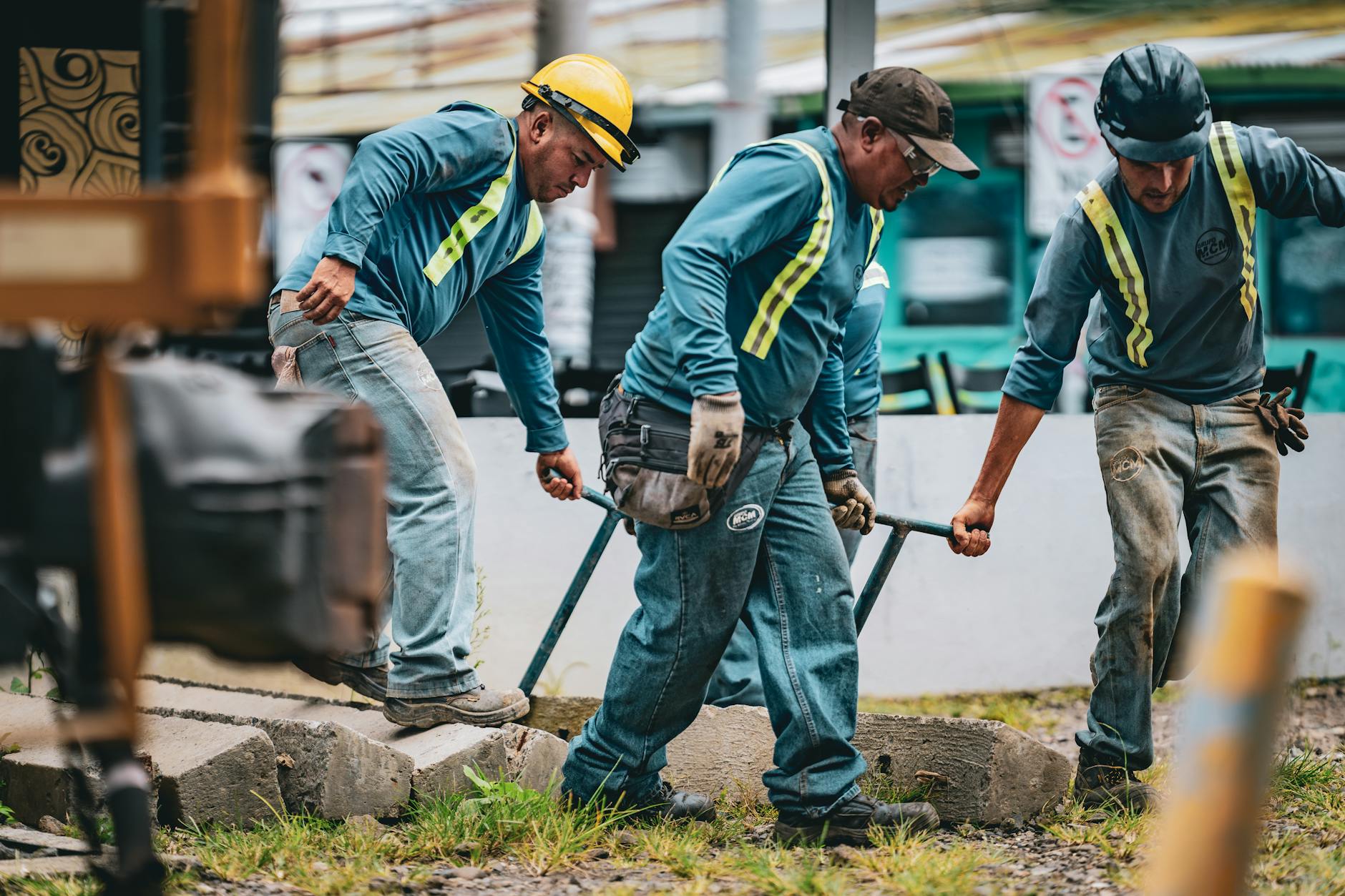
By contrast, manual labor is immediate. A fence stands, or it falls. A field yields or it does not. The connection between effort and outcome is visible. That visibility disciplines the worker in truthfulness — you cannot lie and say a job was done well when it physically wasn’t. Reality becomes the standard.
The decline of manual labor, though, doesn’t just mark an economic shift. There’s also a cultural loss. Traditions, as we know them, are carried in texts, but before that, they were transmitted through practices. Many of them were physical, learned through apprenticeship. The mechanic and the farmer might read or pass down tomes of knowledge, but more likely, they are custodians of experiential skill.
When such work is devalued or outsourced, what disappears is a way of recognizing the world.
This has political implications as well. Manual labor has historically supported forms of independence that are essential to a free society. A person who can build and grow possesses a degree of self-sufficiency that resists total dependence on large, centralized systems. Thinkers like Wendell Berry have long argued that local, embodied work anchors communities and limits the reach of distant power. When work becomes purely digital, detached from place, control tends to consolidate in the hands of those who own the platforms.
None of this is an argument against technology.
The digital economy has brought real gains in opportunity. The question is whether digital work can sustain the full range of human goods — and for how long. Tools developed by companies like OpenAI promise a new horizon in which the distance between intention and output collapses even further. The machine acts in place of the worker, generating media and decisions once tied to human effort and skill.
Worse yet, AI notoriously convinces the individual that they are the one doing the actual work.
In doing so, AI advances a subtle but significant claim: that labor can be abstracted from the person altogether. The worker becomes a curator of outputs, a manager of processes.
To recover the dignity of manual labor is to remember something older and truer. It’s hard work, decidedly so. There’s no need to romanticize the hardship of eighty-hour workweeks done under the July sun. But we were made to work with our hands in a world that teaches us how to live within its limits.
If we can recover and redeem ordinary work, we can remain human.