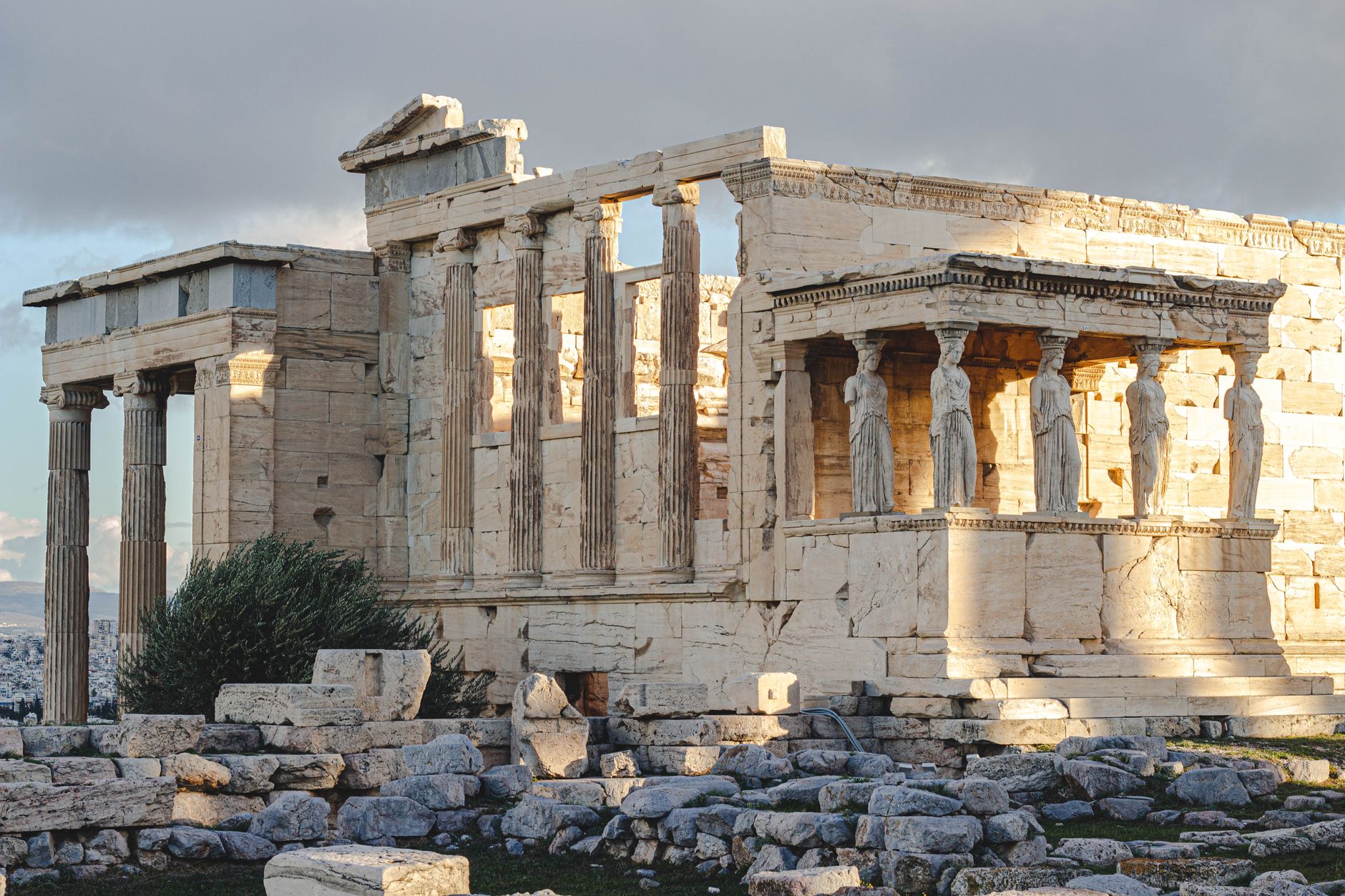
In the book of Acts Chapter 17, the evangelist Luke records these words, “These men who have turned the world upside down have come here also….” Paul and Silas had arrived in the city of Thessalonica after Paul had spent the last several months traveling the East of the Roman Empire. His purpose was straightforward: to make Christ known. As he travels, the Spirit of God works through his ministry, and many come to believe in Jesus. Word had begun to precede Paul by the time he arrived in the city of Thessalonica, so much so that the Jews, as seen in the passage, had heard of these men and their message already. Paul and the other apostles and followers of Christ did not begin to change the world through force of arms, threats, bribery, or other means of coercion. Fundamentally, they changed the world by telling its people of the God who had radically changed it by sending His only Son.
It would be inappropriate to say that the ultimate actor in this process was Paul, or any of the disciples for that matter. Jesus Christ Himself was changing the world by renewing the hearts and minds of its people through the Holy Spirit. Even so, Paul and other believers were the instruments.
There is a lesson to be learned from these reflections, a lesson that Christians living in 21st-century America need to carefully heed: the Gospel is the only instrument capable of truly changing the disposition of mankind.
On Easter Sunday 2024, Americans were greeted with a bevy of public declarations from elected officials. Many of these declarations were oriented towards Easter itself, but many more were not. Instead, these other messages, including several from the president himself, elevated International Transgender Day of Visibility. This day had been held on the 31st of March for some years, but many people, especially Christians, were justifiably outraged at the level of attention and recognition it received compared to arguably the most significant event in all of human history: the resurrection of Christ. In the outrage, one can find two distinct facets.
First, it is true that International Transgender Day of Visibility being elevated in the public square is inappropriate and should be fought. As a matter of civic responsibility, we should not encourage destructive delusions — delusions that are the most destructive towards the people who come to embody them. Furthermore, for the youngest generations, those whom we are catechizing by way of our civic rituals, we must elevate values that are consistent with the nation and those that create productive, healthy citizens. In the traditional Easter message, or even the shallow Easter Bunny-isms, one finds far more commendable and uplifting ideals than that of Transgenderism.
Secondly, however, Christians lost sight of a painful truth. Those in the world who are lost will act like it. We cannot expect people who have no care for God or His order to be considerate of the Holy days that exist because of what He has done. Of course, the world’s blatant attack on Christian holidays goes beyond a mere apathy. That antipathy is also to be expected, and, rightfully, resisted. Even so, we cannot expect people who are dead in sin to desire the things of God. The inclination of Christians seems to be, “Well, if we focused on the right things more people would become Godly!” That is to say, if we just had a president who made social media posts not about International Transgender Day, but about Jesus Christ, all our problems would cease. If only the basic virtues of our society were once again “Christian,” then we wouldn’t have such levels of debauchery. It is true that if a common virtue of our society were chastity, we would eliminate much brokenness and pain. It is true that if our civic leaders pushed for virtue, we would be, nominally, more virtuous. Superficial morality is not, however, the fundamental problem.
Paul did not try, as we already reflected, to change the world through the point of a sword, but neither did he try to change it by instituting new public policy. Paul knew that the only thing that could truly and honestly change people’s minds, the only thing that could transform their very desires, the only thing that could replace their hearts of stone with hearts of flesh was the Gospel. That tenet is what Christians must always return to.
Yes, we should try to improve the world through virtuous laws. Yes, we should stand for what is good and true.
At the center of the Christian faith, there is not a specific public policy or political party we affirm. In the deepest levels of our creeds, there is not a set of holidays that must be kept sacrosanct. No, the faith rests on one thing, one person: Jesus Christ. Apart from Him and His redeeming work, it matters little if a society is nominally righteous or not. Apart from Christ, we are hopeless. In Christ, though, in the Gospel, we find the power of God to turn us from death to life. We find the power to truly remake nations and empires. We find what turns this world on its head and turns our hearts to Him.