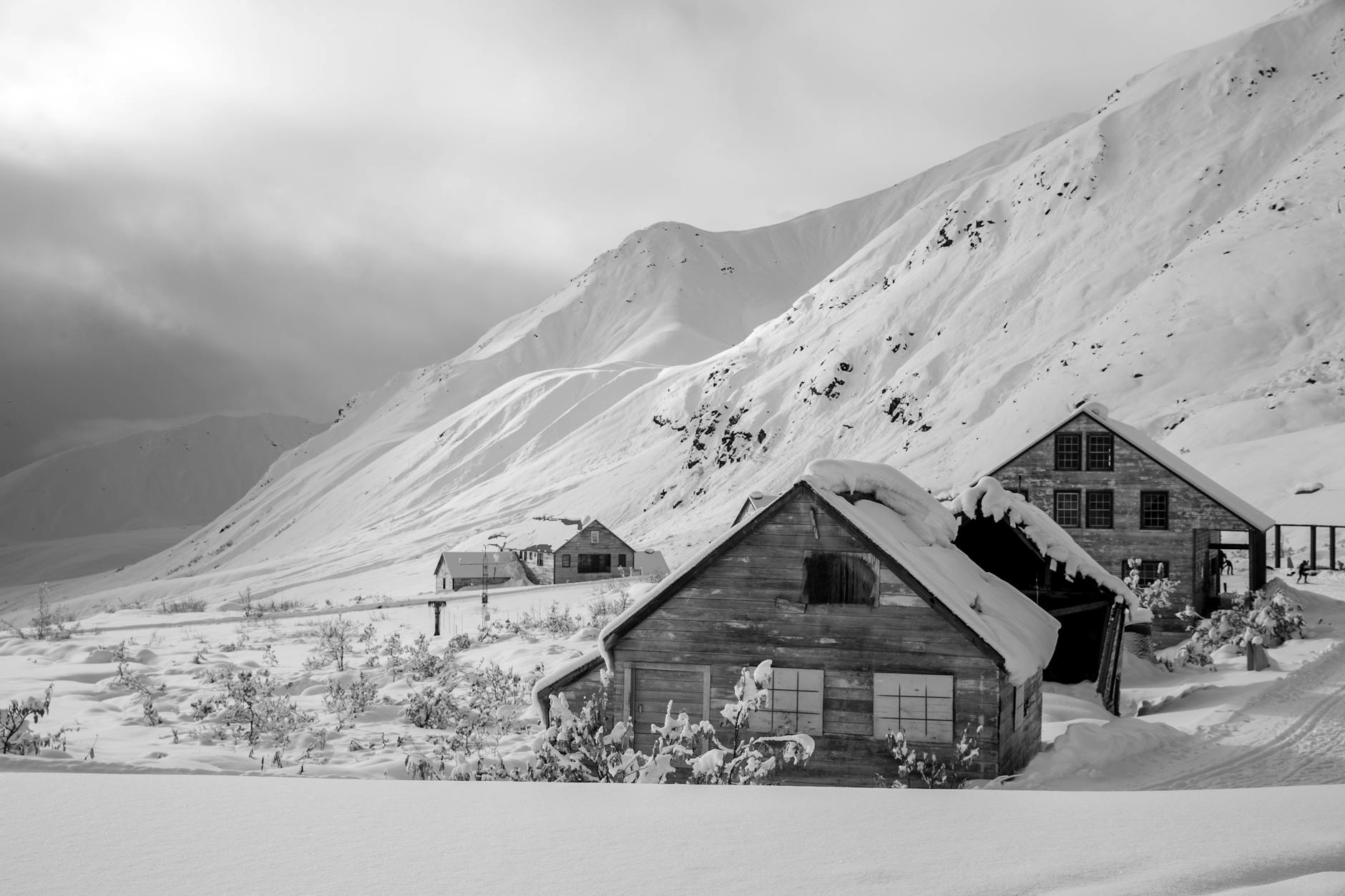
For those of you not blessed to live in or near the original 13 colonies during the past few weeks, you might not have had the glorious experience of shoveling your life out from at least a foot of snow recently. While counterintuitive, this is a moment for gratitude.
The past month saw Winter Storm Fern wreak havoc on towns and cities across America, with destruction concentrated specifically in states like Tennessee and Mississippi. As someone who lives an hour north of Pittsburgh (one of the major American cities that still successfully exudes toughness and can shovel snow), everywhere I go is surrounded by massive mountains of snow. And honestly? While the effects of destructive weather are, well, destructive, let’s all take a minute and acknowledge the largely unsung hero of why most of Americans are safe and (fairly) warm this month: hydrocarbons.
You don’t have to be an energy scientist to note that the past several years of green energy initiatives have had pretty questionable results (although many energy scientists have noted this). You don’t have to be well acquainted with various companies’ energy strategies to understand that the trendiness of much of the net-zero movement is crumbling quickly (although I am, and observe this move on a near-daily basis).
There are many reasons for the fact that we’re shifting away from activist-driven narratives about scope 3 emissions and back towards a realistic posture that supports America’s energy independence. But, after two weeks of incredible cold and (at least in my area of the country) a shortage of sunlight, let’s be honest about the fact that the reliability of traditional energy sources has been keeping Americans alive.
In a rather macabre-ly New York Times piece titled “It’s Very Cold. Just Wait for the Grid to Fail,” Heatmap executive editor Robinson Meyer writes that the biggest problem with freak storms is not lack of supply but other externalities. He writes:
“The people responsible for the country’s electricity grid have been working overtime, asking for more government help than usual and maxing out some power plants. They have thankfully avoided disaster so far — and while more than a million Americans lost power in the past week, those outages were mostly caused by snow and ice breaking poles and wires, not by demand exceeding supply.”
First, the fact that this assertion was published at a center-left magazine is an indicator of how much the energy debate has shifted in recent years. Second, Meyer’s point is worth taking some time to think about. Less than two centuries ago, Americans on the pioneer front faced widespread transportation challenges, food shortages, and unimaginable conditions. Some of the more great-books-minded among you may have probably read Laura Ingalls Wilder’s ‘The Long Winter,’ and historical records from the time document exactly how bad things got in the 1880s on the Great Plains: “People were sometimes found frozen to death near their own front doors, having lost their way.”
For the vast majority of human history, and a good bit of American history, the notion of freezing to death in a particularly harsh winter wasn’t that unfathomable. There are many lessons to be learned by our insane rate of progress as a species, particularly in the Free West (a term we should use more).
For young conservatives: The next time you’re tempted to reminisce about some supposedly better past era that you want to live in, devote a little time and study to considering the possibility that you wouldn’t have lived long enough to scratch that nostalgia itch. There is nothing wrong, or anti-American, or inherently postmodern about noting the obvious reality that the modern age has many benefits.
We have unprecedented moral and ethical debates to handle, and we face tremendous opposition to defend our worldview of transcendent morals and human dignity. But those debates are the product of modern abundance and decadence. LARPing our way out of dealing with those debates by questioning whether the abundance was really worth it is the single worst response possible.
This whole energy thing may not be that interesting to you. But at a moment like this, as parts of the country face brutal winter storms and most people don’t freeze to death as a result, let’s have a minute of gratitude: gratitude for the modern enterprise system, the tremendous innovative power of markets, and the energy that God, in His wisdom, placed into our planet to be harnessed for the good of His creation. You may not care about that. But take a minute and respectfully consider that some gratitude might be in order. The core of being a truly Western person is gratitude. Right now, we should all be very grateful for a system that has prioritized energy realism over nice-sounding net-zero fantasies.
It is the labor and practical innovation of countless people that have made a world where you get to sit in a heated, well-lit room in February and debate the true meaning of virtue. Let’s all be grateful for it.